
TL;DR
- Most dental professionals develop work-related musculoskeletal pain during their careers.
- The big four fixes: seating, patient positioning, magnification, and micro-breaks.
- Saddle seating is the highest-leverage change – research links it to lower ergonomic risk.
- Neutral posture: ears over shoulders over hips, elbows low, feet flat.
Ergonomics in dentistry is not a comfort upgrade – it is career protection: work-related musculoskeletal disorders are among the leading reasons dental professionals reduce hours or leave clinical practice early.
The encouraging part is that the biggest risk factors are all controllable, and none of the fixes requires expensive equipment.
Why Dentistry Hurts
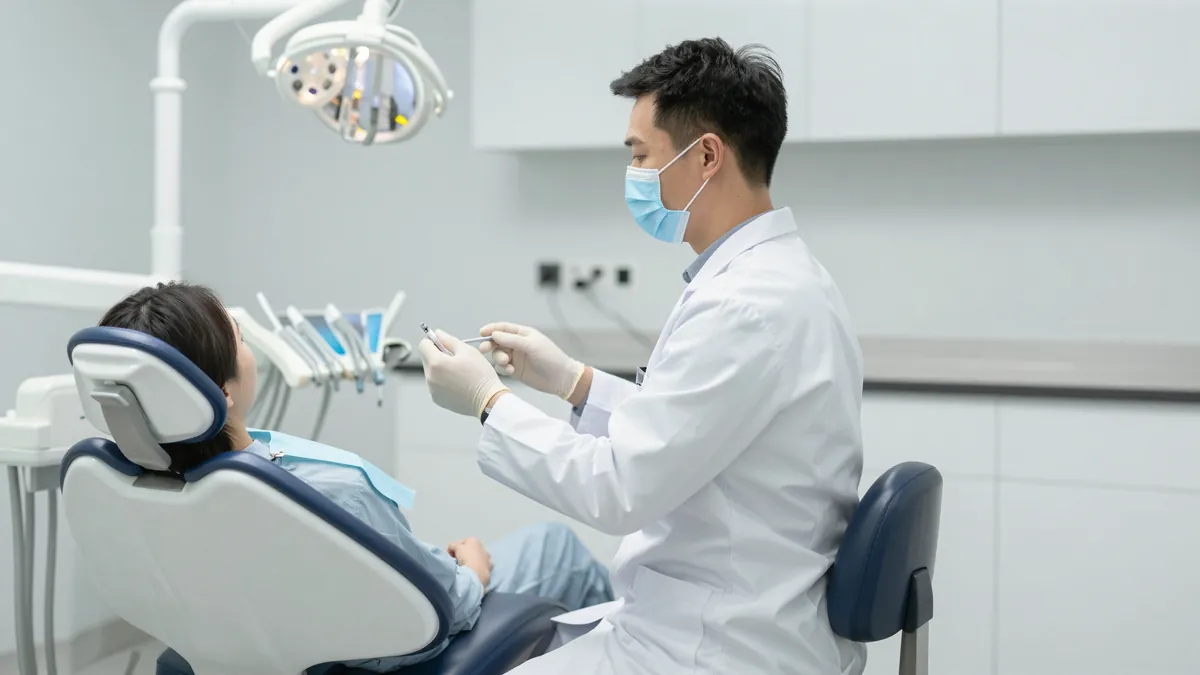
Clinical dentistry combines four risk factors that few other professions stack together: sustained forward leaning over a small work field, high-precision hand work that locks the shoulders, long static holds without movement, and repeated twisting in cramped operatories.
Held daily across years, these produce the neck, shoulder and lower-back disorders that surveys consistently find in a large majority of practicing clinicians.
The Neutral Posture Checklist
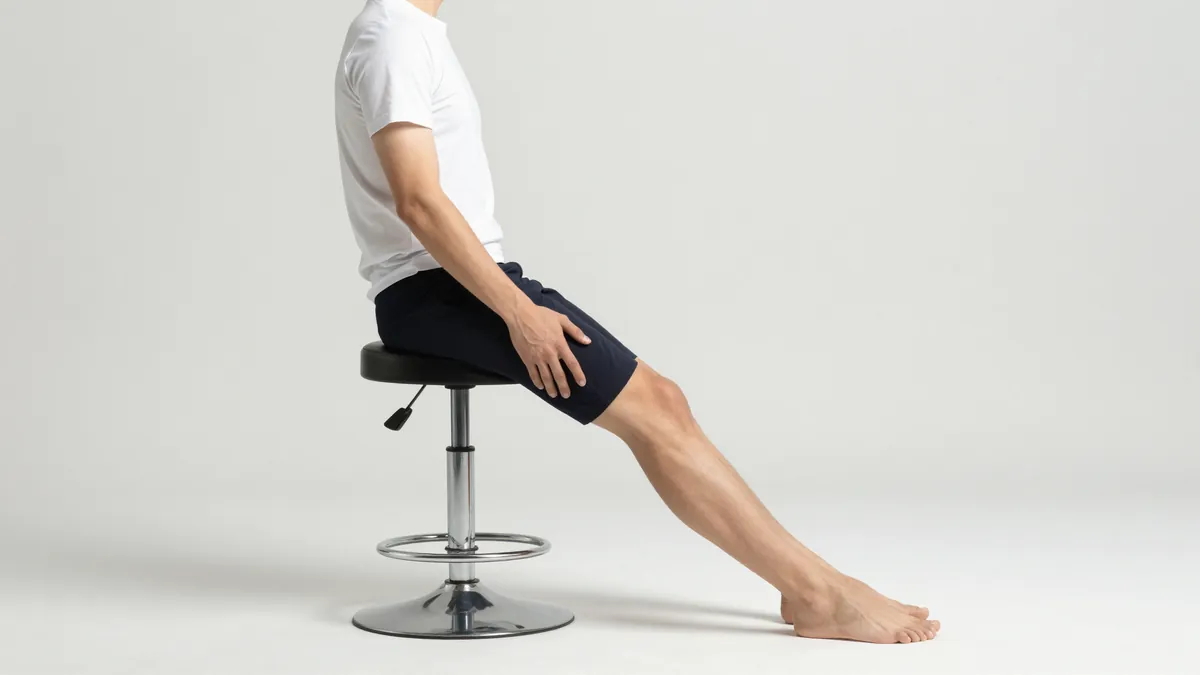
- Ears stacked over shoulders, shoulders over hips – no forward head drift.
- Elbows relaxed at your sides, lifted less than 25 degrees.
- Hips above knees with thighs sloping down (the saddle stool position).
- Feet flat and weight-bearing, not hooked on stool casters.
- Torso facing the work – move around the patient instead of twisting.
The Big Four Interventions
| Intervention | What it fixes | Where to start |
|---|---|---|
| Saddle seating | Pelvis and lumbar curve; the foundation everything else stacks on | Why saddles work and how to set one up |
| Patient positioning | Forward lean and twisting | Chair height sequence and clock positions |
| Magnification (loupes) | Forward head posture from trying to see | Properly measured declination angle matters more than magnification power |
| Micro-breaks and movement | Static load accumulation | 20-30 second posture resets between patients; stretch at lunch |
Evidence Worth Knowing
A systematic review and meta-analysis comparing saddle and conventional seats found saddle designs associated with significantly lower ergonomic risk scores (PMC6296655).
Reviews of ergonomic interventions in dentistry consistently show improvement in seated posture with ergonomically modified stools.
Equipment alone is not sufficient – positioning habits and breaks carry real weight – but seating is the change that works even on your worst, busiest day, because it does not rely on remembering anything.
Building Your Setup
Start with seating matched to your role: operators, assistants who need back support, or precision workers who benefit from armrests.
Then fix the patient side with the adjustment sequence, and if you are equipping a room from scratch, our cost guide budgets the whole operatory.
FAQs
Why is ergonomics important in dentistry?
Because work-related musculoskeletal disorders affect the large majority of dental professionals at some point and are a leading cause of reduced hours and early retirement from clinical work. Ergonomics is the set of controllable habits and equipment choices that prevent this.
What is the correct sitting position for a dentist?
Neutral posture: ears over shoulders over hips, elbows relaxed and lifted under 25 degrees, hips above knees with thighs sloping down, feet flat, torso facing the work. A saddle stool makes this position largely automatic.
Do saddle stools really help with dentist back pain?
Research comparing saddle and conventional seats found significantly lower ergonomic risk with saddle designs, because the forward-tilted pelvis maintains the lumbar curve while leaning toward patients.
How often should dental professionals take breaks?
Brief posture resets of 20 to 30 seconds between patients, plus genuine movement at longer breaks. Static load accumulates silently, and micro-breaks interrupt it before it becomes pain.