
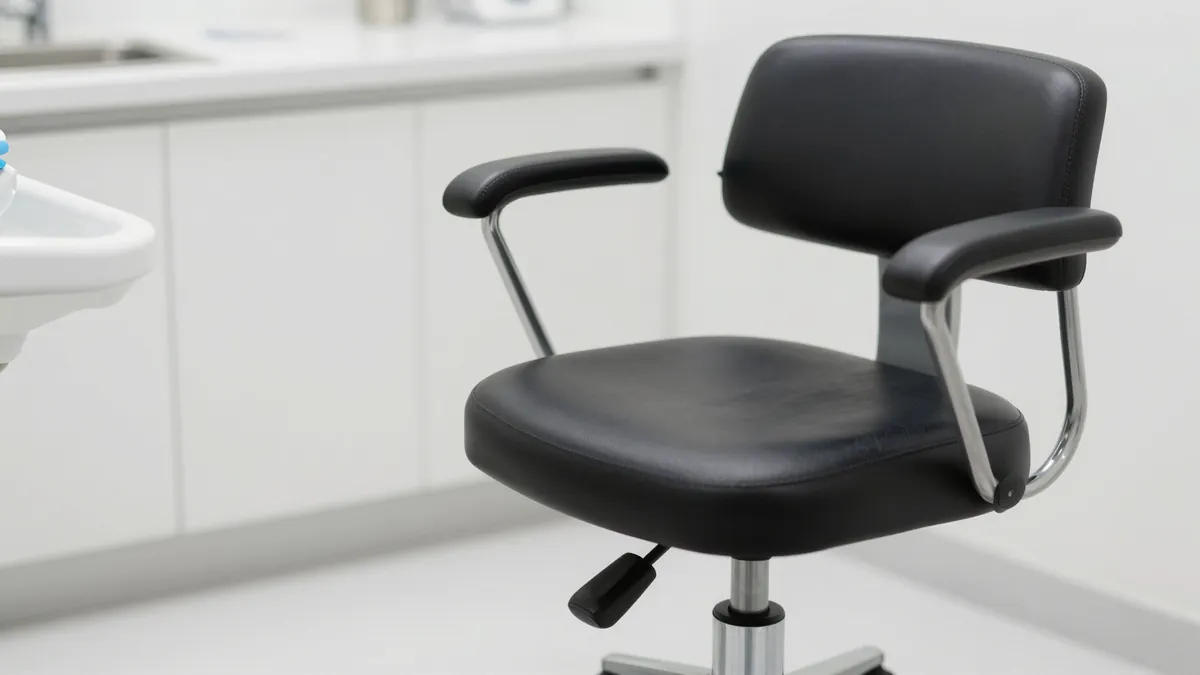
TL;DR
- Armrests help static precision work: assisting, lash sets, microscope and ultrasound work.
- They get in the way if you constantly orbit the patient – choose flip-up arms or skip them.
- Set armrests at relaxed elbow height; too high causes the shrug they should prevent.
A saddle stool with armrests suits clinicians whose work includes long static holds – dental assistants, lash techs, microscope and ultrasound work – where a supported forearm takes real load off the shoulders and neck.
For operators who move constantly around a patient, armrests mostly collide with the patient chair.
This guide covers both the picks and the honest trade-offs.
Disclosure: this page contains affiliate links. If you buy through them we may earn a small commission at no extra cost to you.
Top Picks
| Product | Best for | Price |
|---|---|---|
| TATARTIST saddle chair with backrest & arm support | Best overall (studio and clinic) | Check price |
| Adjustable saddle stools with flip-up armrests | Best for dental assistants (arms lift out of the way) | See options |
| Dental stools with 360-degree rotating armrests | Best for microscope and precision work | See options |
| Saddle chairs with armrest and footrest | Best all-in-one for tall working heights | See options |
How we picked: armrest adjustability (height and pivot), whether arms flip up or swing clear, saddle quality underneath, and practitioner feedback.
Full methodology on our How We Review page.
When Armrests Help – and When They Get in the Way
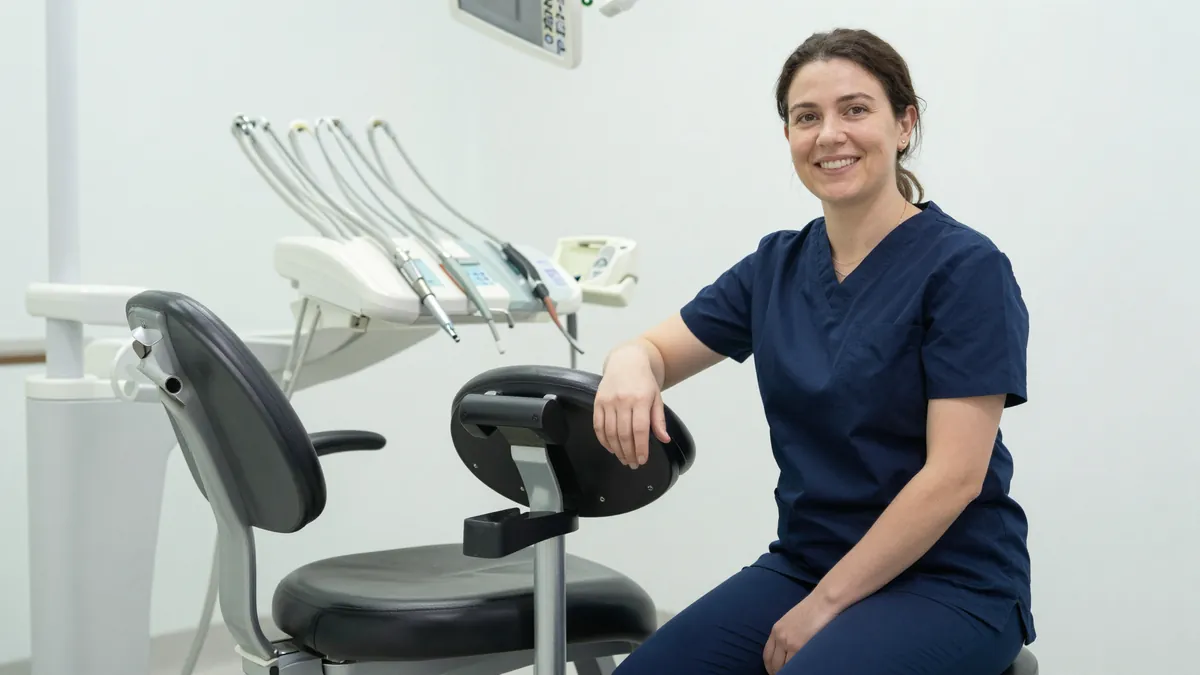
- Help: long static tasks (lash sets, suturing under magnification, scanning, charting) where a planted forearm unloads the trapezius. Searches like “dental stool with armrest” come overwhelmingly from assistants and precision workers.
- Get in the way: orbiting a patient chair – fixed armrests catch on the chair back every time you reposition. If you move constantly, choose flip-up or swing-away arms, or skip arms and use a backrest-only model.
- Rule of thumb: armrests should support the forearm at relaxed elbow height without lifting the shoulder – set them low; too-high armrests cause the exact shrug they should prevent.
Alternatives Worth Considering
If your goal is back support rather than arm support, a saddle stool with a backrest does more for less bulk.
If pressure or numbness is the issue, look at split saddle seats.
And if you work high, a footrest model may matter more than arms.
The full landscape is in our ergonomic seating guide.
FAQs
Are armrests on a saddle stool worth it?
For static precision work (assisting, lash sets, microscope work, ultrasound) yes – a supported forearm measurably unloads the shoulders. For clinicians who move around a patient constantly, fixed armrests get in the way; choose flip-up designs or skip them.
What height should stool armrests be set to?
At relaxed elbow height, so the forearm rests without lifting the shoulder. Armrests set too high cause shoulder shrug – the exact strain they are meant to prevent.
Can you get a saddle stool with both armrests and a backrest?
Yes – several models combine a saddle seat, adjustable backrest and flip-up or rotating armrests, popular with dental assistants and tattoo artists who alternate between active and static work.