TL;DR
- Dental assistants sit 4 to 6 inches higher than the operator, so they need a taller stool with foot support.
- The CoVibrant lockable stool (24 to 31 inches, backrest, foot ring) is the best overall pick for chairside assisting.
- The Nazalus is the pick if you want a saddle seat at assistant height.
- Shorter assistants should look at the HNKastela, which starts at 19 inches.
- Choose in this order: height range, foot support, backrest adjustment, weight rating.
The best dental assistant chair with back support for most assistants is the CoVibrant Lockable Stool with Back and Foot Rest: it adjusts from 24 to 31 inches, has a backrest and a foot ring, and is rated to 350 lb.
A backrest matters more for dental assistants than for anyone else in the operatory, because assistants hold static postures for longer.
Height matters just as much, because an assistant sits above the operator to see over their hands.
Every stool below has a backrest, and five of the six reach 28 inches or higher.
Disclosure: this page contains affiliate links. If you buy through them we may earn a small commission at no extra cost to you. This never affects which products we list.
Quick Comparison
| Stool | Best for | Seat | Seat height | Weight rating | Foot support | Price |
|---|---|---|---|---|---|---|
| CoVibrant Lockable Stool with Back and Foot Rest | Best Overall for Chairside Assisting | Round | 24 to 31 in | 350 lb | Foot ring | Check price |
| Nazalus Saddle Stool with Backrest and Footrest | Best Saddle Seat at Assistant Height | Saddle | 22.4 to 30.4 in | 350 lb | Footrest | Check price |
| HNKastela Saddle Stool with Foot Ring | Best for Shorter Assistants | Saddle | 19 to 28 in | 400 lb | Foot ring | Check price |
| FRNIAMC Saddle Stool with Back Support | Widest Height Range | Saddle | 20 to 29.5 in | 350 lb | None | Check price |
| DR.LOMILOMI Rolling Saddle Chair with Back Support | Best Heavy-Duty Build | Saddle | 21 to 26 in | 400 lb | None | Check price |
| Antlu Saddle Stool with Adjustable Backrest | Lightest to Move Between Operatories | Saddle | 21.5 to 28.5 in | 350 lb | None | Check price |
How we picked: we compared stools on seat height range, foot support, backrest adjustment, weight rating and the number of buyer ratings, not on commissions.
The full method is on our How We Review page.
Specs and ratings were checked against the Amazon listings in November 2026.
The Best Dental Assistant Chairs with Back Support
1. CoVibrant Lockable Stool with Back and Foot Rest: Best Overall for Chairside Assisting
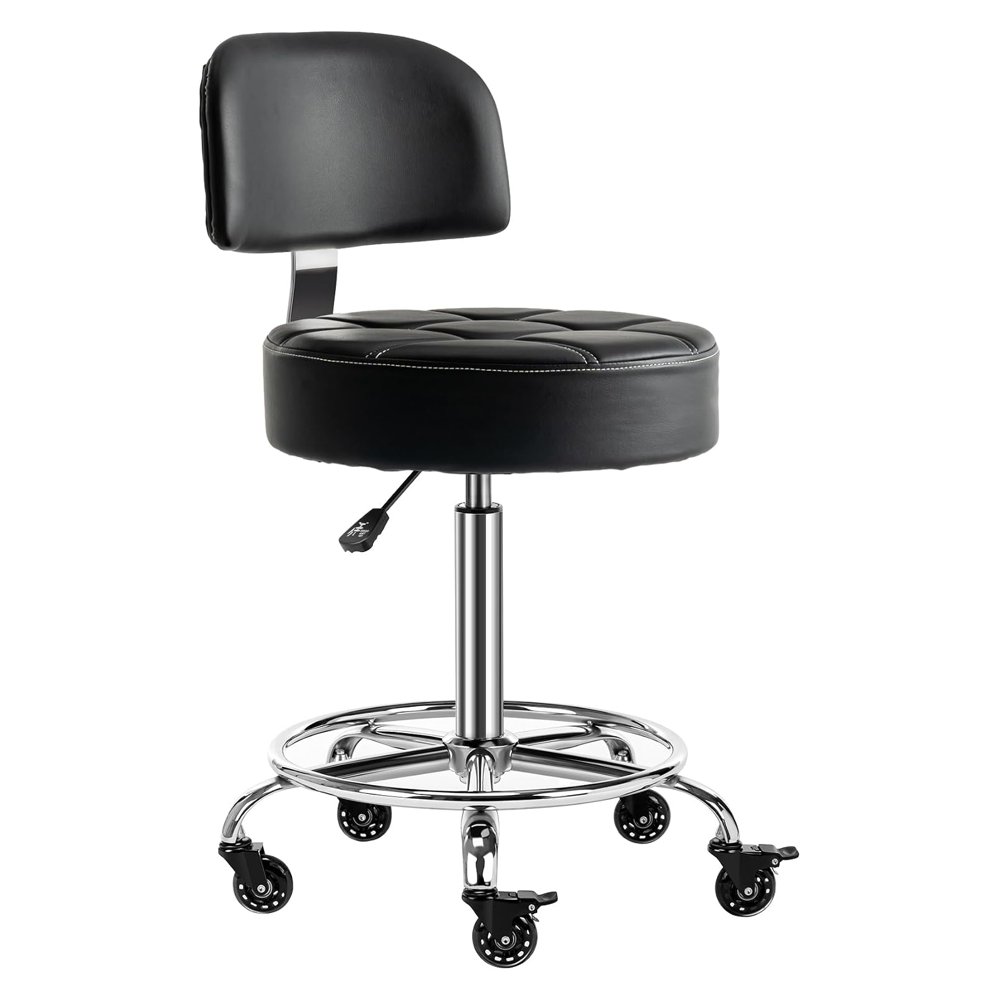
This is the only stool here built at assistant height from the start, with a 24 to 31 inch seat, a backrest and a foot ring.
The round seat is 16 inches wide and 3.75 inches thick, and the stool is rated to 350 lb.
It holds 4.3 stars from more than 1,100 Amazon ratings, the most of any stool on this page.
Pros: true assistant height range, foot ring, backrest, very widely reviewed.
Cons: a round seat instead of a saddle, and the 24 inch minimum is too tall to share with an operator.
2. Nazalus Saddle Stool with Backrest and Footrest: Best Saddle Seat at Assistant Height
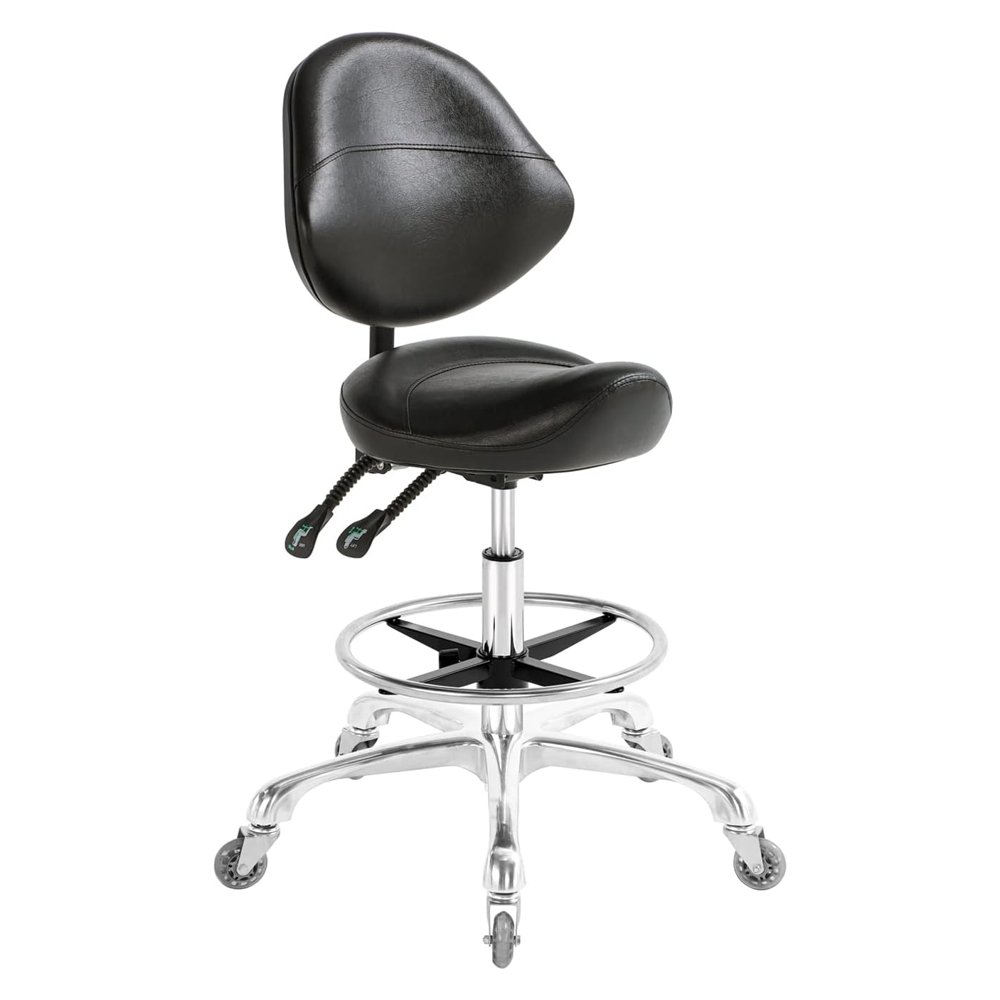
Choose this one if you want the open hip angle of a saddle seat and still need to sit above the operator.
The seat adjusts from 22.4 to 30.4 inches, so it reaches assistant height, and the footrest supports your legs once your feet leave the floor.
It is rated to 350 lb.
Pros: saddle seat, backrest and footrest in one stool, tall cylinder.
Cons: fewer than 100 Amazon ratings so far.
3. HNKastela Saddle Stool with Foot Ring: Best for Shorter Assistants
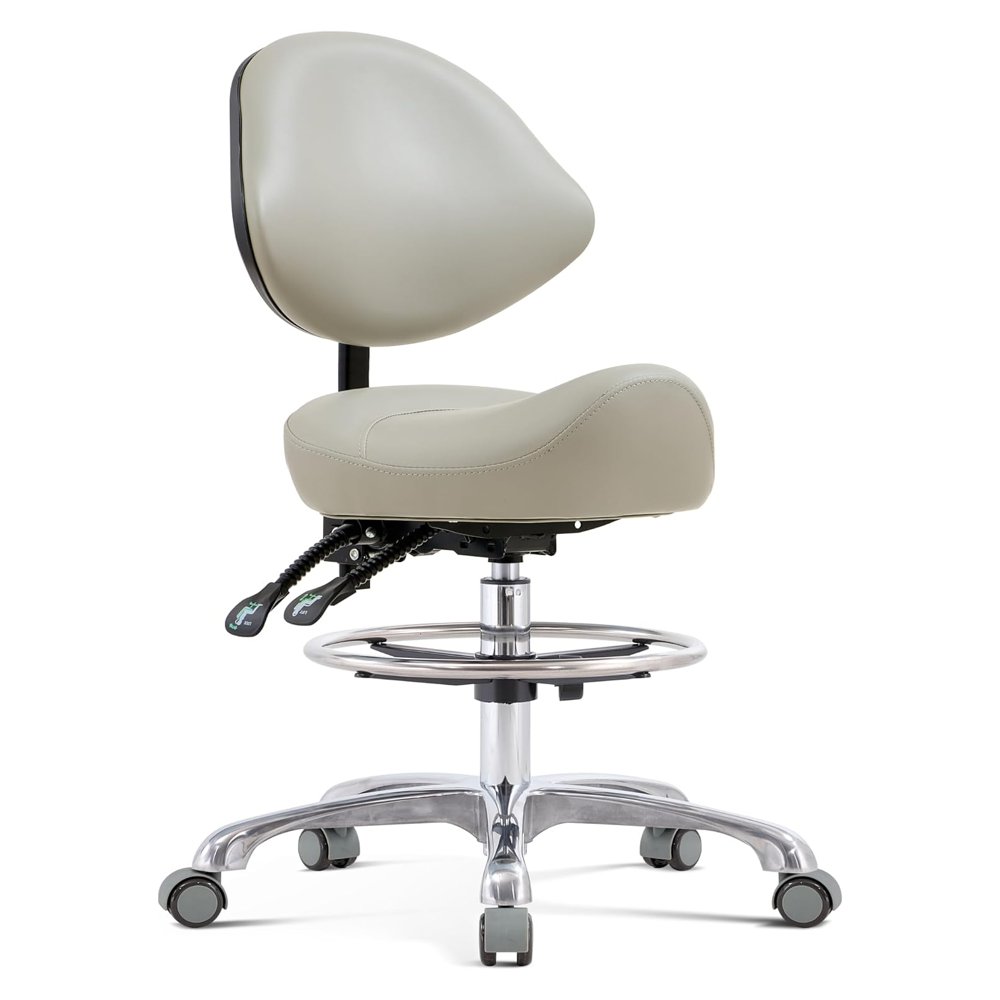
The seat starts at 19 inches, the lowest minimum on this page, and still rises to 28 inches.
That range suits shorter assistants, and it lets an operator and an assistant share one stool.
It has an adjustable backrest and a foot ring, and it is rated to 400 lb.
Pros: lowest minimum height here, foot ring, 400 lb rating.
Cons: the 28 inch maximum can be short for tall assistants working beside a tall operator.
4. FRNIAMC Saddle Stool with Back Support: Widest Height Range
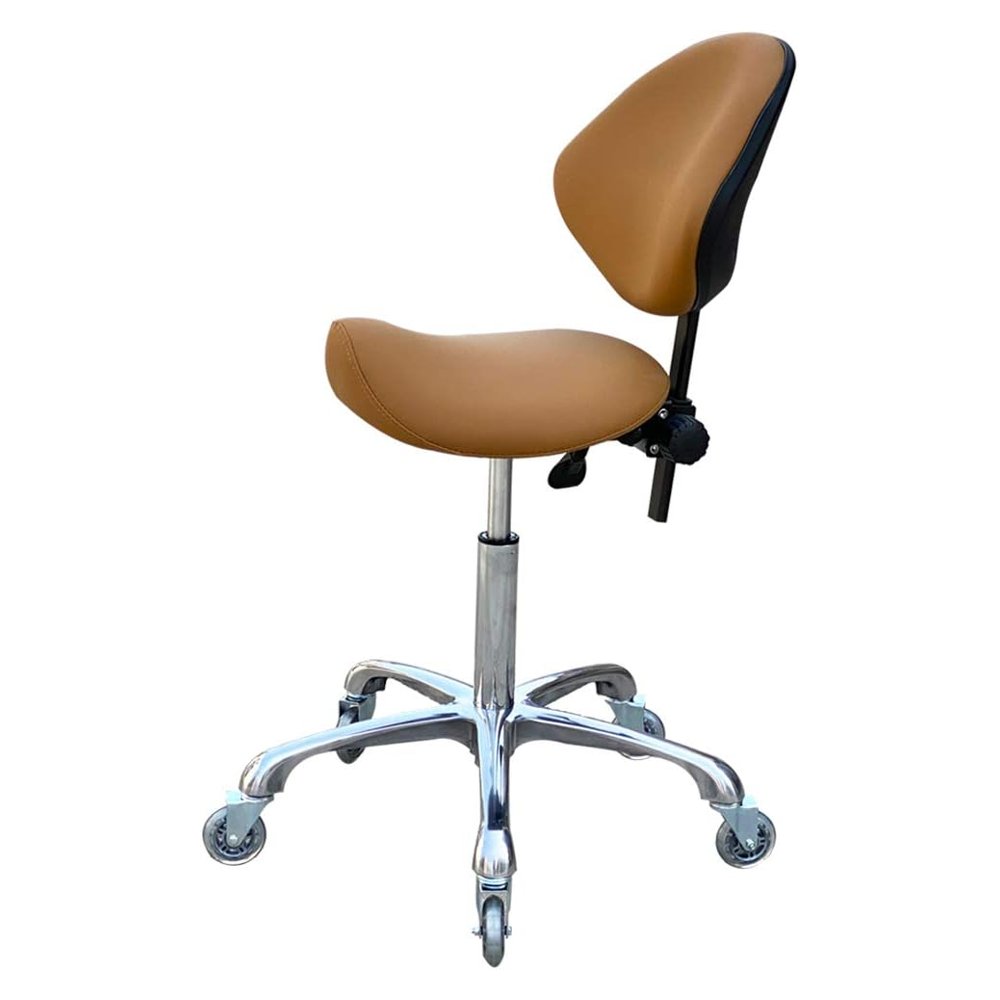
The 20 to 29.5 inch range is the widest on this page, so one stool covers operator height and most assistant positions.
It is rated to 350 lb and has more than 800 Amazon ratings.
Pros: widest height range, backrest, widely reviewed.
Cons: no foot ring, so add a separate footrest if your feet hang at assistant height.
5. DR.LOMILOMI Rolling Saddle Chair with Back Support: Best Heavy-Duty Build
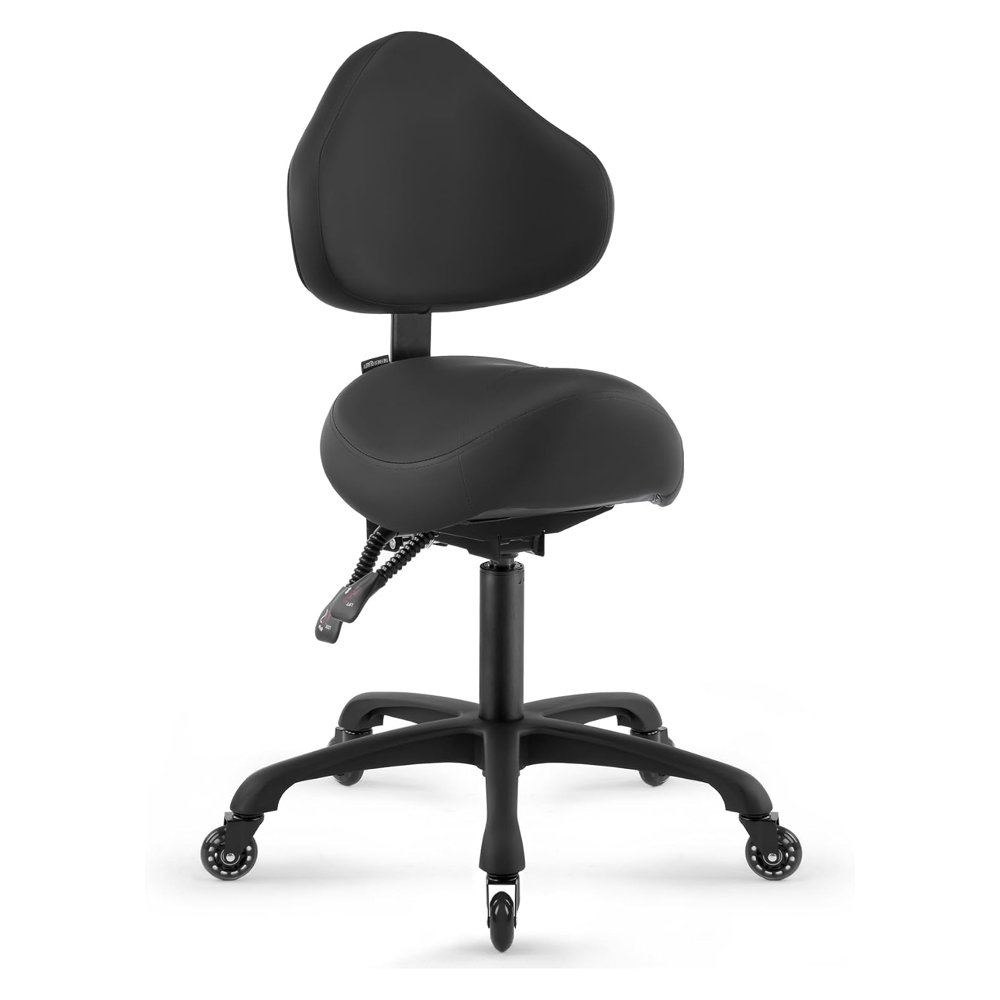
This one has a reinforced aluminum five-leg base rated to 400 lb and a tilting backrest.
The seat adjusts from 21 to 26 inches, so it suits assistants who work beside a low-seated operator, or anyone who also works at operator height.
Pros: aluminum base, 400 lb rating, tilting backrest, 4.3 stars from more than 400 ratings.
Cons: the 26 inch maximum is too low for many assistant positions, and there is no foot ring.
6. Antlu Saddle Stool with Adjustable Backrest: Lightest to Move Between Operatories
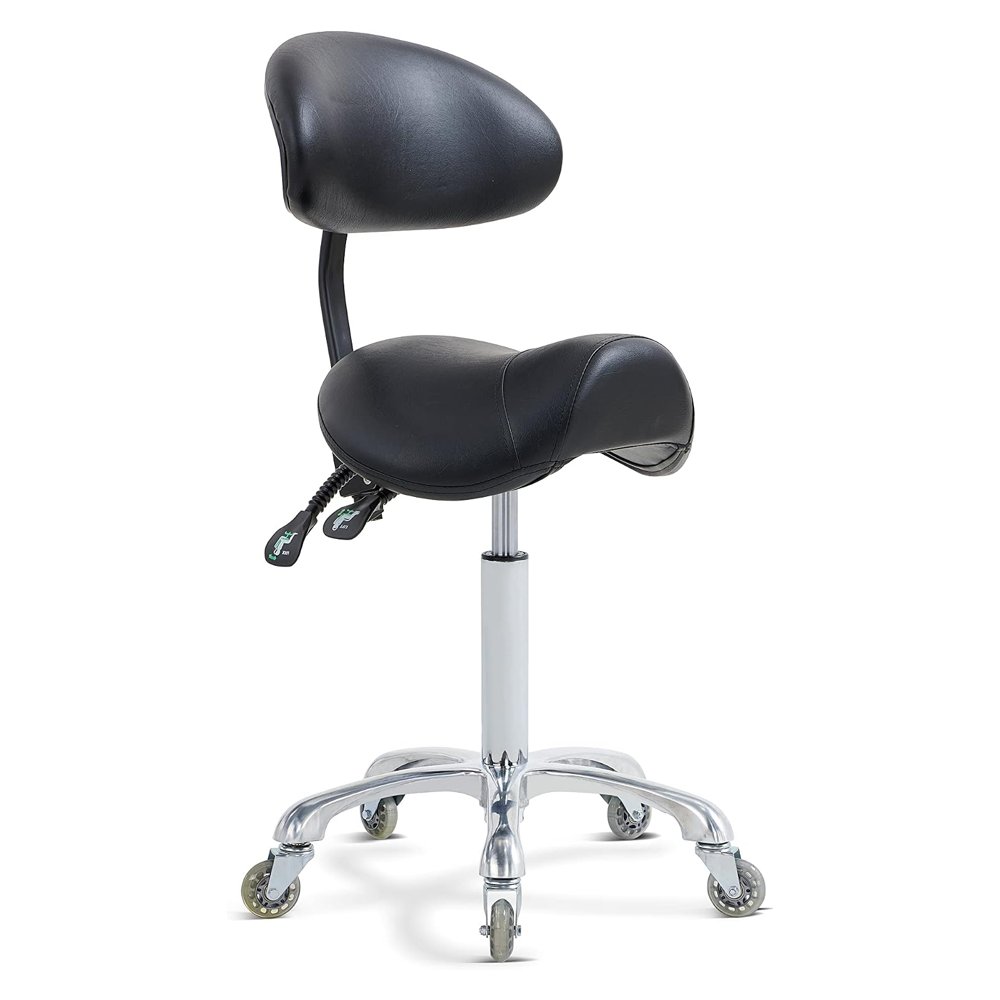
At 17 pounds this is the lightest stool on this page, which matters if you carry your stool from room to room.
The seat adjusts from about 21.5 to 28.5 inches, the backrest is adjustable, and the stool is rated to 350 lb.
Pros: light, adjustable backrest, no-tool assembly.
Cons: no foot ring, and the 28.5 inch maximum can be short for tall assistants.
Dental Assistant Chair vs Operator Stool: What Is Different
An assistant stool does a different job from an operator stool.
The assistant sits 4 to 6 inches higher than the operator, so the seat has to go higher than most standard stools reach.
At that height your feet leave the floor, so a foot ring or footrest stops your legs from hanging.
Assistants also twist toward the patient and hold that position, which is why back support matters more than it does for an operator who keeps moving.
If you work at operator height instead, see our guide to the best saddle stools for dental hygienists.
Do You Need Armrests or a Torso Support?
You do not need armrests to assist well, but a torso support helps if you lean toward the patient for most of the day.
A torso support is a padded bar that swings in front of your stomach, so your upper body can rest on it while you hold suction and retract.
None of the six stools on this page has one, and we have not found a budget stool at assistant height that does.
That bar is a large part of what you pay for with assistant stools from dental brands such as A-dec, Brewer and Crown Seating.
If you assist for only part of the day, a backrest and a foot ring cover most of what a torso bar does.
Our guide to saddle stools with armrests covers the stools that add arm or torso support.
Buying Your Own Chair When the Office Will Not
Many dental assistants buy their own chair, usually because the practice will not replace an old one.
In one r/DentalAssistant thread about favorite assistant chairs, the assistant who started it planned to buy her own and take it with her if she ever left.
A dentist replying in the same thread said assistant chairs from the big dental companies cost more than $1,000, and that budget saddle stools at a previous office had done the job.
If you buy your own, choose a light stool you can carry between rooms, keep the receipt and put your name on it.
One tip from that thread is worth copying: swap the stock casters for rollerblade-style wheels, which roll more quietly on hard floors.
It is still worth asking the practice to pay, because a stool costs far less than a staff injury.
How to Choose a Dental Assistant Chair
- Check the maximum seat height first. Most assistants need a stool that reaches at least 28 inches, and tall assistants beside a tall operator need closer to 31 inches.
- Get foot support. A foot ring or footrest is necessary once your feet no longer rest flat on the floor.
- Choose a backrest that adjusts in depth, not just height, so it supports your lower back without pushing you off the seat.
- Check the weight rating. Pick a rating at least 50 lb above your body weight, because cylinders fail early near their limit.
- Decide between a round seat and a saddle. A round seat feels familiar and makes side-to-side moves easy, while a saddle keeps your hips open when you lean in.
- Buy from a retailer with easy returns. Fit is personal, and many clinicians try two stools and return one.
Our saddle stool height and sizing guide shows how to match seat height to your own height.
How to Set Up Your Dental Assistant Chair
- Let the operator set their height and the patient chair first.
- Raise your seat until your eye level is 4 to 6 inches above the operator.
- Set the foot ring so your feet rest flat on it and your thighs slope slightly down.
- Bring the backrest forward until it touches your lower back while you sit upright.
- Roll in close enough to reach the mouth without leaning, and turn your hips toward the patient instead of twisting at the waist.
For the patient chair itself, see how to adjust your dental chair.
Budget Chairs vs Professional Assistant Chairs
The stools on this page are budget models sold on Amazon, and many assistants buy their own.
Professional assistant stools from dental seating brands add a torso support arm that wraps in front of your body, which no stool on this page has.
If you want that kind of support, see our guides to saddle stools with armrests and Crown Seating saddle stools.
For round operator stools and more assistant options, see the best dental stools for dentists and assistants.
Two related guides: Amazon saddle stools vs $1,000 dental brands and how to sit on a saddle stool.
FAQs
How high should a dental assistant stool be?
High enough that your eye level sits 4 to 6 inches above the operator. For most assistants that means a seat height of about 24 to 31 inches with a foot ring or footrest, because your feet will no longer rest flat on the floor.
What is the best chair for a dental assistant with back pain?
A stool that reaches assistant height with a backrest you can bring forward to your lower back, plus foot support so your legs do not hang. A saddle seat with a backrest and footrest also keeps your hips above your knees, which helps your spine hold its natural curve.
Are dental assistant stools different from hygienist stools?
Yes, mainly in height. Assistants usually sit 4 to 6 inches higher than the operator, so an assistant stool needs a taller cylinder and a foot ring. A supportive backrest also matters more, because assistants hold static positions for longer.
Do dental assistants need a foot ring?
Yes, whenever the seat is too high for your feet to rest flat on the floor. Without foot support your legs hang, the seat edge presses into your thighs and you slide forward off the backrest.
Can a dental assistant use a saddle stool?
Yes. Choose a saddle stool that reaches assistant height and has a footrest or foot ring, then set the backrest to touch your lower back. A saddle seat keeps your hips open while you lean toward the patient.
Do I need a backrest on a saddle stool?
Assistants who hold long static postures benefit most from a backrest. Clinicians who move around the patient often prefer backless saddles for freedom of movement. If you get one, choose a backrest that adjusts in both height and depth.
What weight rating should a dental assistant stool have?
Pick a rating at least 50 lb above your body weight, because gas cylinders wear out early when they work near their limit. The stools on this page are rated from 350 to 400 lb.
Do dental assistant chairs need armrests?
No. Most assistants work well with a backrest and a foot ring. A torso support bar helps if you lean toward the patient through long procedures, but it is found on professional stools from dental brands, not on budget models.
Should I buy my own dental assistant chair?
It makes sense if the office chair does not reach your working height or has no foot support. Budget chairs with a backrest cost far less than professional assistant stools, and you can take yours with you if you change offices.
Related guides: split saddle stools, saddle stools with footrests, and our full ergonomic seating guide.