TL;DR
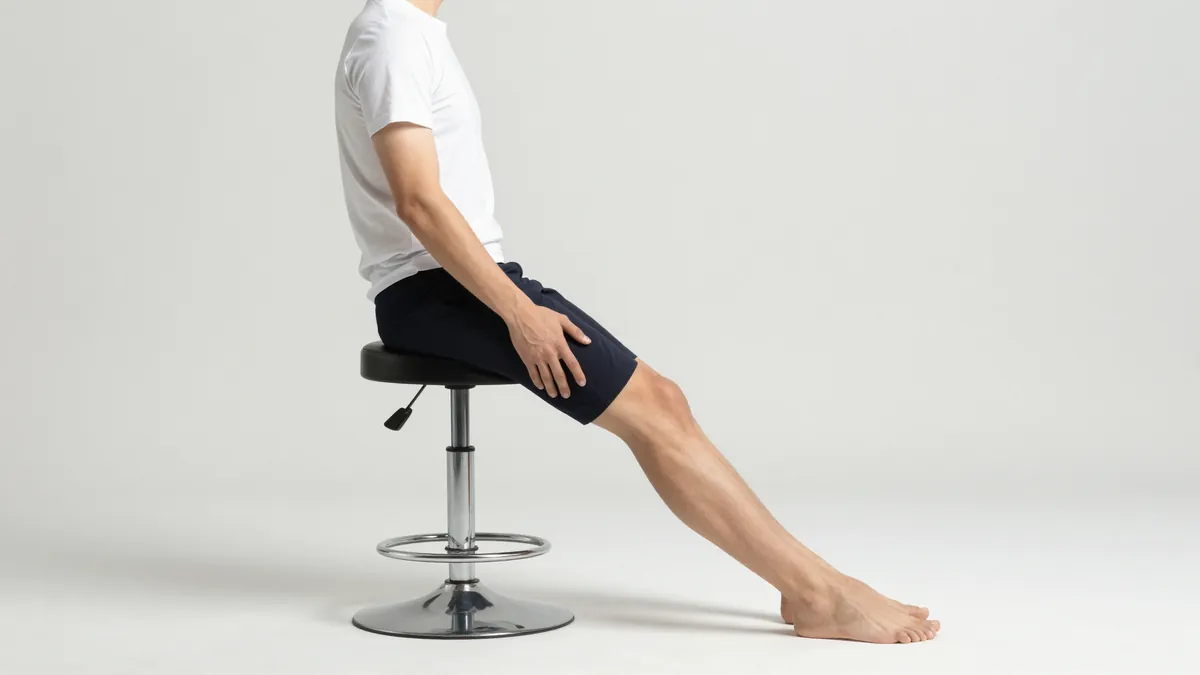
- Height: thighs sloping down at about 45 degrees, feet flat, hips above knees.
- Start with the seat level; add forward tilt only if your lower back rounds.
- Raise your desk or the patient chair – you now sit 4 to 8 inches higher.
- Give it one to two weeks; start with 1-2 hours a day.
To sit on a saddle stool correctly: set the height so your thighs slope down at roughly 45 degrees with feet flat, keep the seat level (add slight forward tilt only if needed), and straddle it like a rider – hips open, weight on your sit bones, spine tall.
Wrong setup is the number one reason people think saddle stools hurt.
Here is the full method.
What Is a Saddle Stool?
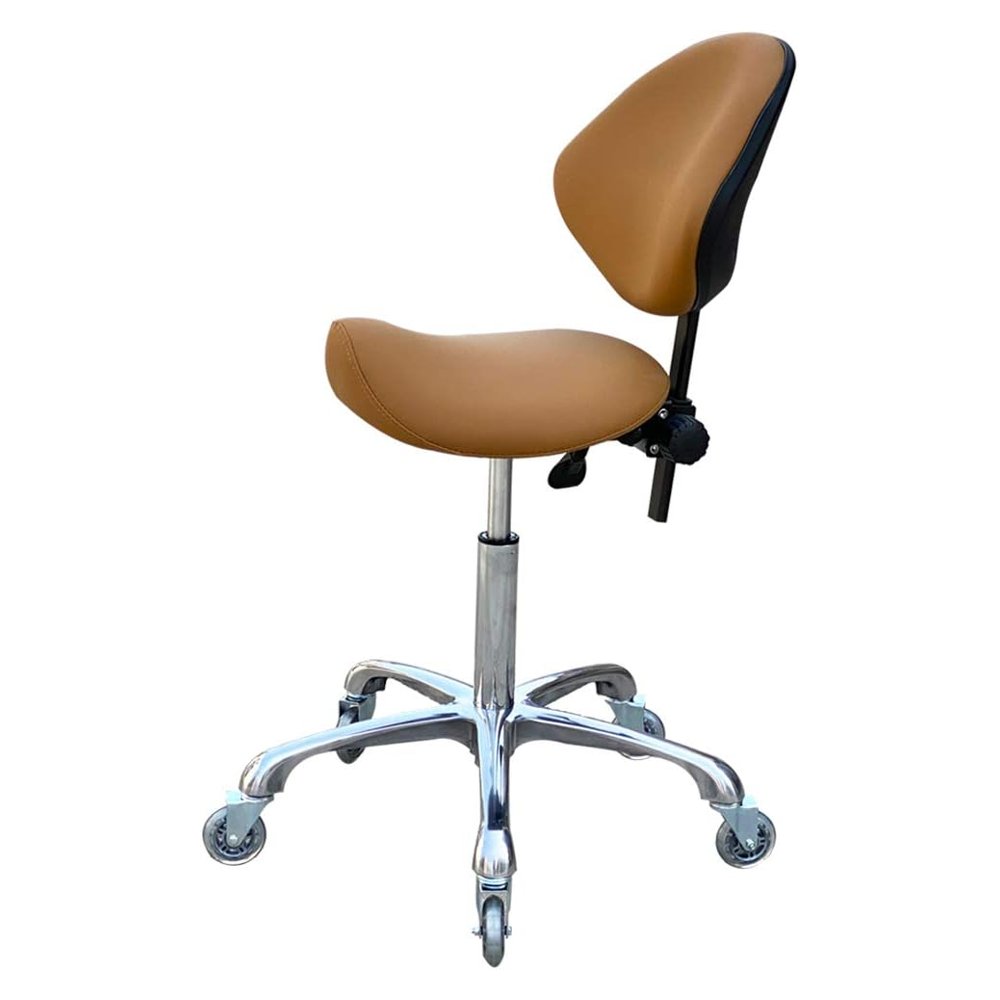
A saddle stool, also called a saddle chair, is a height-adjustable rolling stool with a seat shaped like a horse saddle.
You sit astride it with your thighs sloping down, which opens the angle at your hips to roughly 110 to 135 degrees.
That angle tips the pelvis forward and helps the lower back keep its natural curve without a backrest.
Some models add a backrest, a foot ring or a split seat.
A typical example is the FRNIAMC saddle stool with back support, shown below.
Step-by-Step Setup
- Height first: raise the seat until your hips are clearly above your knees and your thighs slope down at about 45 degrees. You will sit noticeably higher than on a normal chair – that is the point.
- Feet flat, ground contact: both feet rest flat, sharing your weight. If your feet dangle, lower slightly or use a stool with a foot ring.
- Seat tilt level to start: if your model tilts, begin level. Add a few degrees of forward tilt only if you feel your lower back rounding during work.
- Straddle, don’t perch: sit into the saddle with weight on the sit bones, not the soft tissue. On a split saddle, each half should support one sit bone.
- Check the mirror test: from the side, your ear, shoulder and hip should stack vertically with a visible curve in your lower back – no effort required.
Match Your Working Surface
Sitting 4 to 8 inches higher means everything you work at must rise too.
In the operatory, raise the patient chair (our chair adjustment guide covers the sequence).
At a desk, you need a sit-stand desk at mid-height or a riser.
Using a saddle at a standard-height desk forces you to hunch, and the stool gets blamed for the desk’s crime.
The Two-Week Adaptation Plan
| Days | Usage | What to expect |
|---|---|---|
| 1-3 | 1-2 hours, easy tasks | Feels unfamiliar; mild inner-thigh and core awareness |
| 4-7 | Half your working day | Adaptation soreness fades; posture starts feeling natural |
| 8-14 | Full day with breaks | Most users fully adapted; standing desk pairing feels easy |
Mild muscle soreness in week one is normal – unused stabilizers waking up.
Sharp, radiating or one-sided pain is not adaptation.
Stop and re-check height, tilt and seat size against your body.
What the First Weeks Feel Like
Expect some muscle soreness in the first one to two weeks, mostly in the lower back, inner thighs and hips.
A long-time user in an r/Ergonomics thread about saddle stools warned that the first weeks can be painful for the back and that it improves with time.
An office worker in an r/GenXWomen thread about saddle stools said their hip flexors took a beating until they adapted, and advised easing in.
Not everyone adapts, and some people give up because of pressure on the sit bones that does not fade.
If the soreness is dull and smaller each day, keep going with the schedule above.
If it is sharp, one-sided or still there after two weeks, check the fit using the symptom table below.
Can You Sit on a Saddle Stool All Day?
Yes, most people can sit on a saddle stool for a full working day once they have adapted, as long as they keep changing position.
A saddle keeps your trunk muscles lightly working, so it is more tiring than a chair you can lean back in.
In the same r/Ergonomics thread, another experienced user described saddle chairs as never restful.
Stand up between patients, or every 30 to 45 minutes at a desk.
A backrest helps during pauses, and many clinicians keep a second chair for charting.
Workplace research is consistent on one point: changing position through the day matters more than which seat you choose.
Is a Saddle Stool Good for You?
For posture, yes: research links saddle seats with a healthier sitting position than flat stools, though not with proven pain relief.
A systematic review of saddle and conventional seats in dentistry found lower ergonomic risk scores on saddle seats.
The research also carries a caution, because one study found more forward neck posture on saddle chairs, which is why your work height matters.
No published study has shown that a saddle stool cures existing back pain.
Our article on saddle stool benefits covers the evidence in more detail.
Mistakes That Make Saddle Stools Hurt
- Too low. The most common error – at normal chair height a saddle presses wrong and tilts you back. When in doubt, go higher.
- Full forward tilt on day one. Aggressive tilt slides you forward and loads your arms; start level.
- Wrong seat size: pelvis width varies – petite riders on wide seats and vice versa both suffer. Check seat dimensions before buying – our height and sizing guide has the numbers by body type.
- Old squishy cushion: a collapsed saddle cannot support sit bones; practitioners describe these as the ones that “hurt your back”.
Saddle Stool Pain by Symptom: Causes and Fixes
If something still hurts after the first week, the location of the discomfort usually points straight to the cause.
| Where it hurts | Most likely cause | Fix |
|---|---|---|
| Groin or genital pressure | Seat too narrow, front “horn” too high, seat tilted too far forward, or sitting too far forward on the saddle | Sit further back, level the seat, and consider a split saddle or a wider seat |
| Tailbone | Saddle curve too deep for your anatomy | Choose a flatter saddle profile or a split seat |
| Inner thighs, like after horse riding | Normal adaptation in the first week, or a seat too wide for your pelvis | Build up time gradually, and check the seat width against your hips |
| Numbness or tingling in the legs | Seat edge pressing under the thighs, usually from sitting too low | Raise the seat so the thighs slope down and the seat edge clears them |
| Lower back ache | Seat too low, so the pelvis tilts back | Raise the seat until the hips sit clearly above the knees |
| Neck and upper back | Leaning toward the work, which saddle seats can encourage | Bring the work closer or higher, and keep your head close to upright |
Hygienists on r/DentalHygiene explain that most groin pain on saddle stools comes from a seat that is too narrow, a tilt that is not adjusted for you, or sitting too far forward, all of which push your weight onto soft tissue instead of your sit bones.
One hygienist with an elongated tailbone found that a deep saddle curve caused severe pain, while a flatter profile solved it.
Users with hypermobile hips also report that split seats relieve pressure that solid saddles cause.
A study on saddle chairs and spinal curvature found they improve the lower-back curve but can increase forward neck posture, so check your work height if your neck aches.
If pain is sharp, gets worse over time, or does not improve after two weeks of gradual use, stop and see a physical therapist.
To make your stool roll more smoothly, see our guide to rollerblade wheels for chairs and stools.
If you wear loupes, re-check your loupes working distance after changing to a saddle stool, because your eye height changes.
Who Should Not Use a Saddle Stool
A saddle stool is the wrong choice for a small group of people.
- People with a fixed, low work surface, because the higher seat will force them to hunch.
- People who are unsteady when sitting down or standing up, because the stool rolls.
- People recovering from hip, groin, tailbone or pelvic surgery or injury, unless their clinician agrees.
- People who need to lean back and rest for much of the day.
If you are pregnant or have a diagnosed spine or hip condition, ask your doctor or physical therapist first.
For hips in particular, see our guide to saddle chairs and hip pain, and for desk use see saddle chairs for office and desk work.
FAQs
How high should a saddle stool be?
High enough that your hips sit clearly above your knees with thighs sloping down at roughly 45 degrees and both feet flat on the floor. This is noticeably higher than conventional chair height – typically 4 to 8 inches more.
Should a saddle stool tilt forward?
Start with the seat level. Add a few degrees of forward tilt only if your lower back still rounds during work. Aggressive tilt from day one slides you forward and causes arm and wrist loading.
Why does my saddle stool hurt?
Usually setup, not the stool: seat too low, too much tilt, wrong seat width for your pelvis, or a worn-flat cushion. Adaptation soreness in the first week is normal; sharp or persistent pain means re-check the setup and fit.
How long does it take to get used to a saddle stool?
One to two weeks for most people, starting with one to two hours a day and building up. Most who give up either skipped the gradual transition or never set the height correctly.
Why does my saddle stool hurt my tailbone?
The saddle curve is probably too deep for your anatomy, which presses on the tailbone. A flatter saddle profile or a split seat usually solves it.
Is it normal for a saddle stool to hurt between the legs?
Mild pressure in the first days can happen, but real groin pain means the seat is too narrow, tilted too far forward, or you are sitting too far forward. Sit further back, level the seat, or try a split saddle.
Can you sit on a saddle stool all day?
Yes, once you have adapted, which takes most people one to two weeks. A saddle keeps your trunk muscles working, so stand up regularly and change position through the day.
Is a saddle stool good for you?
For posture, yes. A systematic review in dentistry found lower ergonomic risk scores on saddle seats than on conventional seats. No study has shown that a saddle stool cures existing back pain.
What is a saddle chair?
A saddle chair is a height-adjustable rolling stool with a seat shaped like a horse saddle. You sit astride it with your thighs sloping down, which opens the hip angle and helps the lower back keep its natural curve.