
TL;DR
- Supine (fully flat) is the standard for most upper-arch work.
- Semi-supine (20-45 degrees) suits lower-arch work and patients who cannot lie flat.
- Trendelenburg (head below heart) is reserved for medical emergencies like syncope.
- The operator moves around a clock face: 8-12 o’clock for right-handed clinicians.
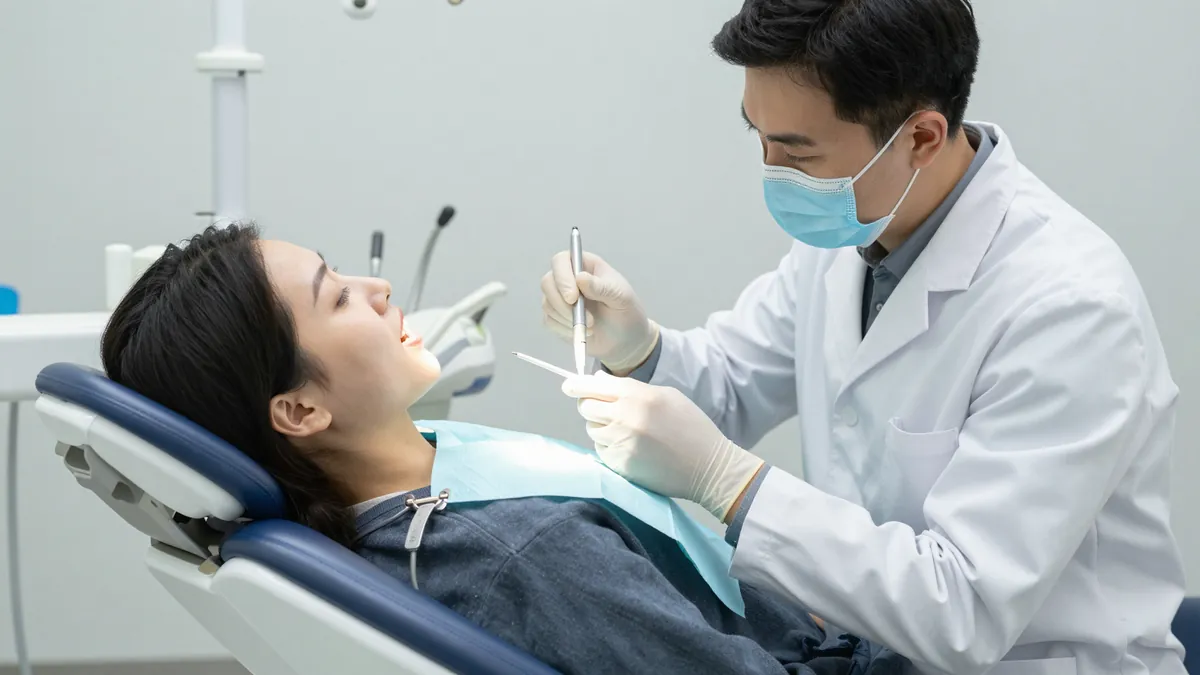
Dental chairs use four main patient positions – upright, semi-supine, supine and Trendelenburg – and the right one depends on the arch you are treating and the patient’s health.
Combined with the operator’s clock position, these two systems decide visibility, access and whether the clinician’s spine survives the day intact.
The 4 Patient Positions
| Position | Chair angle | Used for |
|---|---|---|
| Upright | 80-90 degrees | Patient interviews, radiographs, impressions that risk gagging, denture try-ins |
| Semi-supine (semi-reclined) | 20-45 degrees back | Mandibular (lower arch) procedures; cardiac, respiratory and pregnant patients who cannot lie flat |
| Supine | Nearly flat, nose-knees level | Maxillary (upper arch) work and most restorative dentistry – the default working position |
| Trendelenburg | Flat with head below heart level | Medical emergencies such as syncope (fainting) – not a working position |
A useful reference for supine: the patient’s nose and knees sit at roughly the same height, with the headrest supporting the neck rather than pushing the head forward.
For lower-arch work, raise the back toward semi-supine and drop the chin slightly so the mandibular occlusal plane stays workable.
Operator Clock Positions
Positions around the patient are described as a clock face, with 12 o’clock behind the patient’s head.
Right-handed clinicians work between 8 and 12 o’clock; left-handed clinicians mirror it between 12 and 4.
Moving around the clock instead of twisting your torso is the difference between positioning and contorting – which is why cramped operatories that block 10-12 o’clock cause real ergonomic problems.
| Clock zone (right-handed) | Best for |
|---|---|
| 8-9 o’clock | Anterior surfaces facing the operator, mandibular right buccal |
| 10-11 o’clock | Most treatment – the workhorse zone for both arches |
| 12 o’clock | Maxillary anterior lingual, direct vision over the head |
Positioning the Patient Without Wrecking Yourself
- Set your own stool height first, then bring the patient to your relaxed elbow height – the full sequence is in our chair adjustment guide.
- Use the headrest tilt and ask the patient to turn their head; their neck is more flexible than your spine.
- A saddle stool makes clock movement faster because mounting and rolling take one motion instead of three.
- Patients above the chair’s weight rating change its balance and lift behavior – check your chair’s limit.
FAQs
What is the supine position in a dental chair?
The chair reclined nearly flat so the patient’s nose and knees sit at about the same height. It is the standard working position for maxillary (upper arch) procedures and most restorative dentistry.
What is the semi-supine position used for?
Lower-arch (mandibular) work, and for patients who cannot tolerate lying flat – including many cardiac, respiratory and late-pregnancy patients. The chair back sits 20 to 45 degrees up from flat.
What is the Trendelenburg position in dentistry?
The patient lies flat with the head positioned below heart level. It is an emergency position used for syncope (fainting) to restore blood flow to the brain, not a treatment position.
What are operator clock positions?
Positions around the patient described as a clock face with 12 o’clock behind the head. Right-handed operators work from 8 to 12 o’clock, left-handed from 12 to 4, moving around the clock instead of twisting.