
TL;DR
- A typical dental chair is 5.5 to 6.5 feet long reclined and 26 to 38 inches wide.
- Chairs weigh roughly 300 to 500 lb before the patient.
- Plan an operatory of roughly 10 x 11 feet for comfortable clock-position access.
- Doorways and delivery paths matter as much as the room – crated chairs are bulky.
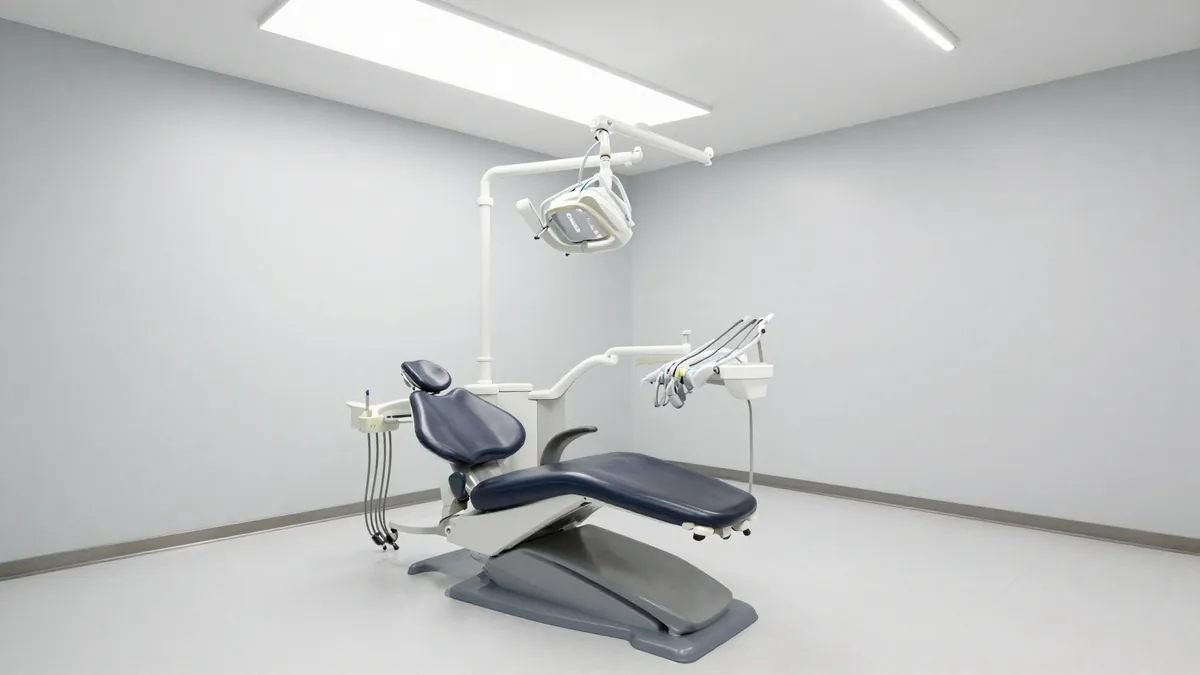
A standard dental chair measures roughly 5.5 to 6.5 feet long when reclined, 26 to 38 inches wide across the backrest, and weighs 300 to 500 lb – and the room around it matters more than the chair: comfortable operatories run around 10 by 11 feet.
Exact figures vary by model, so use these planning ranges and confirm against the spec sheet before committing a room layout.
Typical Dental Chair Dimensions
| Measurement | Typical range | Notes |
|---|---|---|
| Length (reclined/supine) | 5.5-6.5 ft (170-200 cm) | The number that decides room layout |
| Length (upright) | 3.5-4.5 ft (107-137 cm) | Footrest folded positions vary |
| Width (backrest) | 26-38 in (66-97 cm) | Narrow backs improve operator access at 9 o’clock |
| Seat height range | 14-32 in (36-81 cm) travel | Low minimums help elderly and pediatric entry |
| Base footprint | About 2 x 2.5 ft | Plus the utility junction box behind or below |
| Chair weight | 300-500 lb (136-227 kg) | Before the patient – see patient weight limits |
How Much Room Does a Dental Chair Need?
The chair needs working clearance, not just floor space: the operator moves through the 8-to-12 o’clock arc behind the patient’s head, the assistant works opposite, and the delivery system swings between them.
Cramped rooms force the twisting posture that our ergonomics guide warns about – practitioners in small operatories report being locked out of the 10-12 o’clock zone entirely.
- Comfortable operatory: around 10 x 11 ft accommodates the reclined chair, full clock access, cabinetry and the assistant’s zone.
- Workable minimum: smaller rooms function with rear-delivery units and careful layout, but check the reclined length plus operator clearance behind the headrest – about 3 ft of clear space there is the non-negotiable.
- Delivery path: crated chairs are large and heavy; measure doorways, corridors and elevators before ordering (our installation guide covers the site-prep checklist).
- Utilities placement: the junction box position fixes where the chair can sit – plan plumbing before flooring.
Dimensions by Chair Type
Portable chairs fold to suitcase-scale and trade stability for it.
Pediatric chairs run smaller in every dimension.
Bariatric chairs run wider and heavier, with reinforced bases.
Surgical and mobile chairs prioritize full-flat length.
The full breakdown of categories is in our types of dental chairs guide, and budget implications in the cost guide.
FAQs
What are the dimensions of a dental chair?
Typically 5.5 to 6.5 feet long when reclined, 26 to 38 inches wide at the backrest, with seat height travel from about 14 to 32 inches. Exact figures vary by model – check the manufacturer spec sheet.
How much does a dental chair weigh?
Most full-size dental chairs weigh 300 to 500 lb before the patient. This is why floor structure and delivery paths need checking before installation.
What is the minimum room size for a dental chair?
Comfortable operatories run around 10 by 11 feet. Smaller rooms can work with rear-delivery layouts, but keep roughly 3 feet of clear space behind the headrest for the operator’s working arc.
Will a dental chair fit through a standard door?
Usually yes once uncrated, but the shipping crate often will not. Measure doorways, corridors and elevators against the crate dimensions before ordering.