
TL;DR
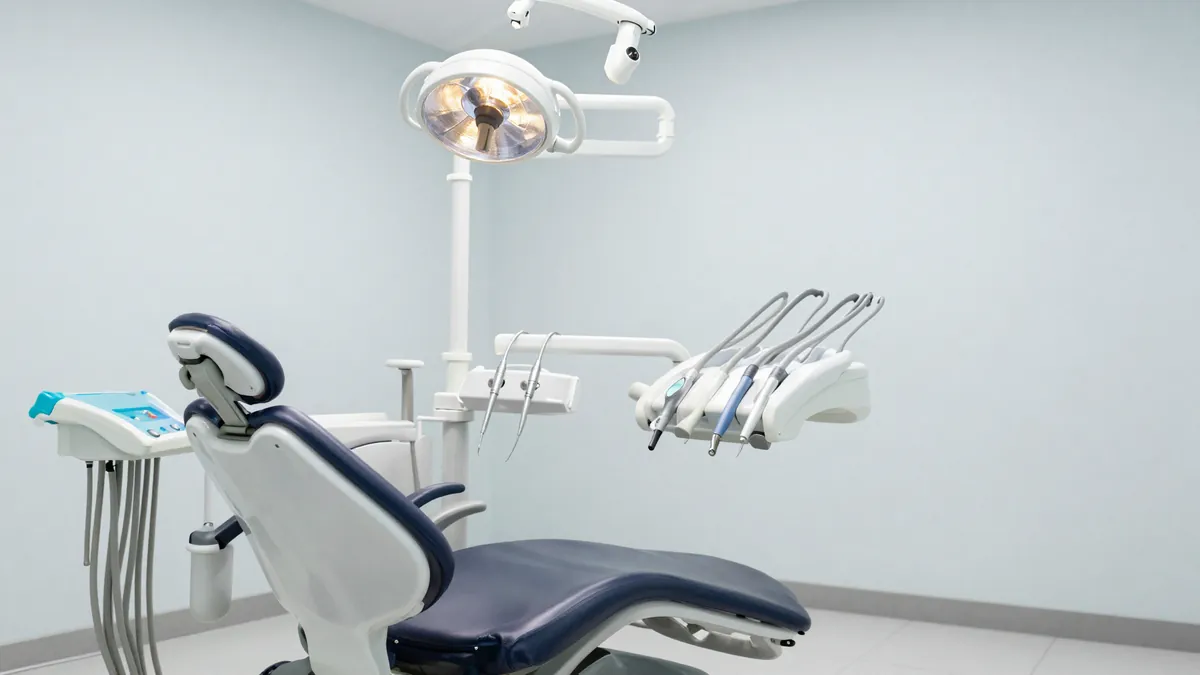
- A dental unit has five systems: the chair itself, the delivery system, the light, the assistant’s arm, and the cuspidor/water unit.
- The chair contributes the base, hydraulic or electric lift, backrest, headrest and controls.
- Foot controls run the handpieces; chair movement uses separate touchpads or foot switches.
- Knowing part names makes service calls faster and cheaper.
A complete dental chair unit is five systems working together: the patient chair (base, lift, backrest, headrest), the delivery system with handpieces, the operating light, the assistant’s arm with suction, and the cuspidor water unit.
Here is every part, what it does, and which ones cause the service calls.
The Chair Itself
| Part | Function | Common issues |
|---|---|---|
| Base and lift system | Anchors the chair; raises and lowers it hydraulically or electrically | Sinking or weak lift – usually seals or fluid (see electric vs hydraulic) |
| Backrest | Reclines from upright to flat for working positions | Jerky travel from worn lift links or motor faults |
| Headrest | Positions the patient’s head – the adjustment that saves your neck | Drift under load when the clamp wears |
| Seat and upholstery | Patient support and infection-control surface | Cracking from harsh disinfectants (upholstery guide) |
| Armrests | Patient entry/exit support; often swing away | Loosening pivots |
| Controls (touchpad/foot switch) | Chair movement and preset positions | Unresponsive buttons – check the dedicated circuit first |
The Delivery System
The delivery unit is the arm-mounted console holding the working instruments: high-speed and low-speed handpieces, the air-water syringe, and often an ultrasonic scaler.
It routes the compressed air and water your installation supplies.
Delivery arms come over-the-patient, side-delivery or rear-delivery – a layout choice that changes team ergonomics more than any single feature.
Light, Assistant’s Arm and Cuspidor
- Operating light: arm-mounted LED in modern units, positioned to shadow-free the oral cavity.
- Assistant’s arm: holds the saliva ejector, high-volume evacuation (HVE) suction and often a second air-water syringe.
- Cuspidor unit: the rinse bowl and cup filler; plumbed to the drain, and part of the waterline system your maintenance routine keeps clean.
- Foot control: runs handpiece speed hands-free – the most abused component on the unit and worth a barrier cover (accessories guide).
Chair vs Unit vs Stool – the Vocabulary
The chair is the patient’s seat, the unit is chair plus delivery system and plumbing, and the stool is the clinician’s seat – covered in our ergonomic seating guide.
Quoted prices usually mean the full unit, which is why the numbers in our cost guide look higher than “just a chair” would suggest.
FAQs
What are the parts of a dental chair and their functions?
The chair contributes the base and lift system, backrest, headrest, seat upholstery, armrests and movement controls. The full unit adds the delivery system with handpieces, the operating light, the assistant’s arm with suction, and the cuspidor water unit.
What is the difference between a dental chair and a dental unit?
The chair is the patient’s seat alone; the unit is the chair plus the delivery system, light, suction and water systems. Most quoted prices refer to complete units.
What is the foot pedal on a dental chair for?
The foot control runs handpiece speed hands-free so the clinician’s hands stay sterile and on the instruments. Many chairs also have separate foot switches for chair movement.
Which dental chair parts fail most often?
The lift system (sinking from worn hydraulic seals), upholstery (cracking from harsh disinfectants), and the foot control (physical abuse). All three are cheaper to maintain than to replace.