
TL;DR
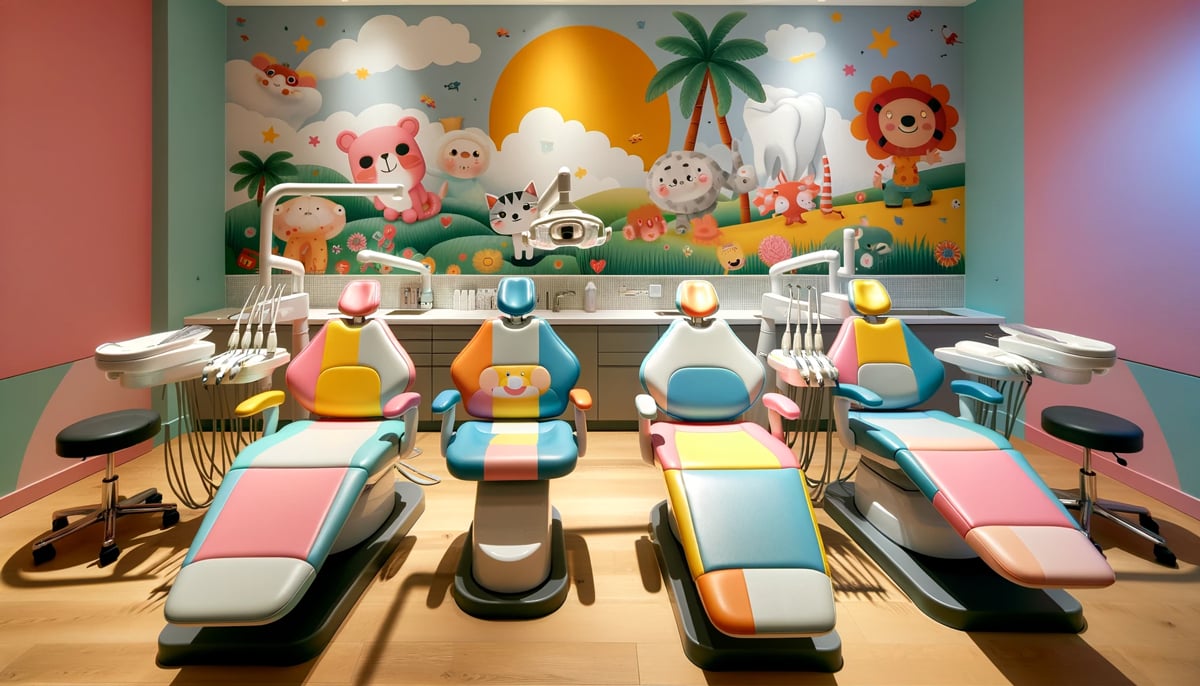
- Pediatric chairs use smaller contoured seating and child-friendly design.
- General practices can adapt a standard chair with a stable booster cushion.
- Most children fit a standard chair by age 8 to 10.
A pediatric dental chair differs from a standard chair in three ways: smaller contoured seating that supports a child’s shorter frame, child-friendly design that lowers anxiety, and positioning that lets the clinician work close without looming.
Many practices skip dedicated pediatric chairs entirely and adapt standard chairs with boosters – both approaches work, and this guide covers when each makes sense.
Disclosure: this page contains affiliate links. If you buy through them we may earn a small commission at no extra cost to you.
Dedicated Pediatric Chair vs Adapted Standard Chair
| Approach | Best for | Watch out for |
|---|---|---|
| Dedicated pediatric chair | Pediatric-only practices, high child volume | Cost of a chair that cannot serve adults |
| Standard chair + booster cushion | General practices seeing some children | Cushion must be stable and wipeable; see options |
| Knee-to-knee setup (infants) | Under-3 exams with parent participation | Not a chair purchase at all – a technique |
Size and Comfort
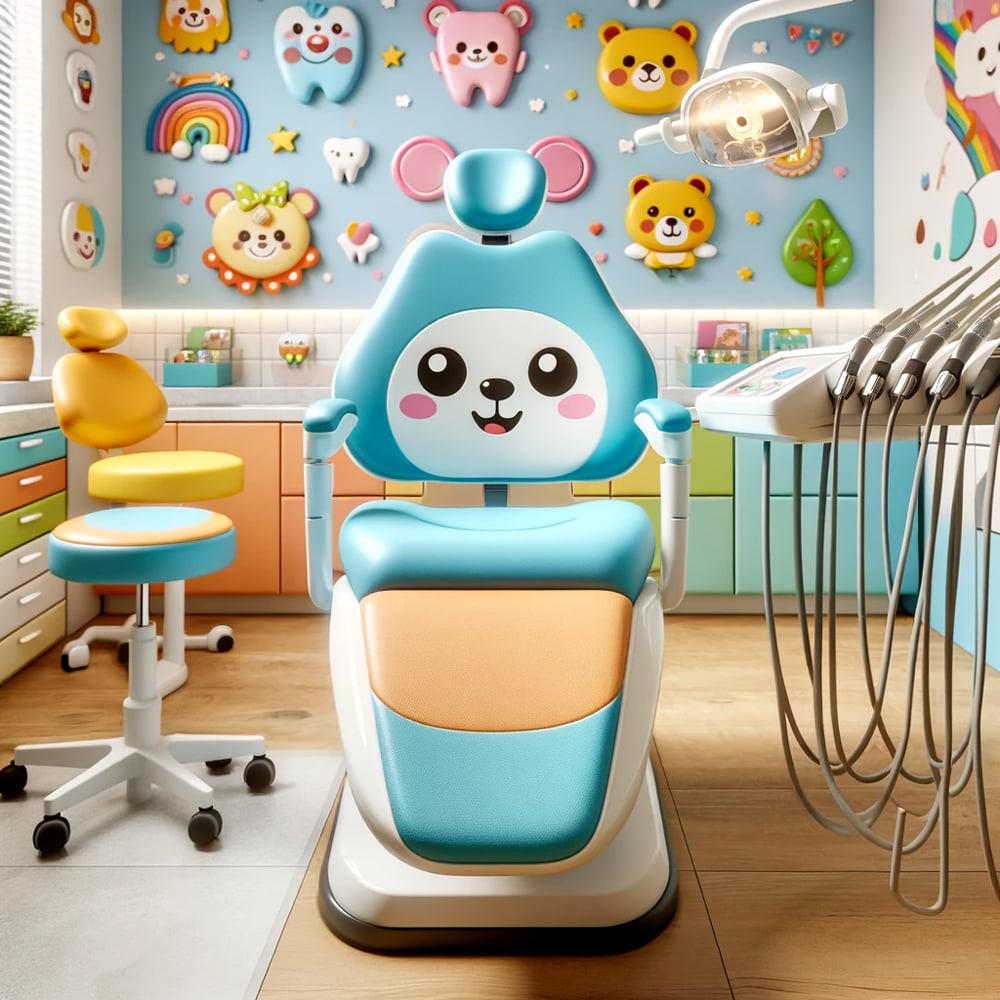
Children slide around in adult-sized chairs, which ruins positioning and makes behavior management harder.
Pediatric seating is narrower with a shorter seat pan, so the child’s head lands where the headrest actually is.
If you adapt an adult chair, a contoured, wipeable positioning cushion does most of that work.
Child-Friendly Design Reduces Chair Time
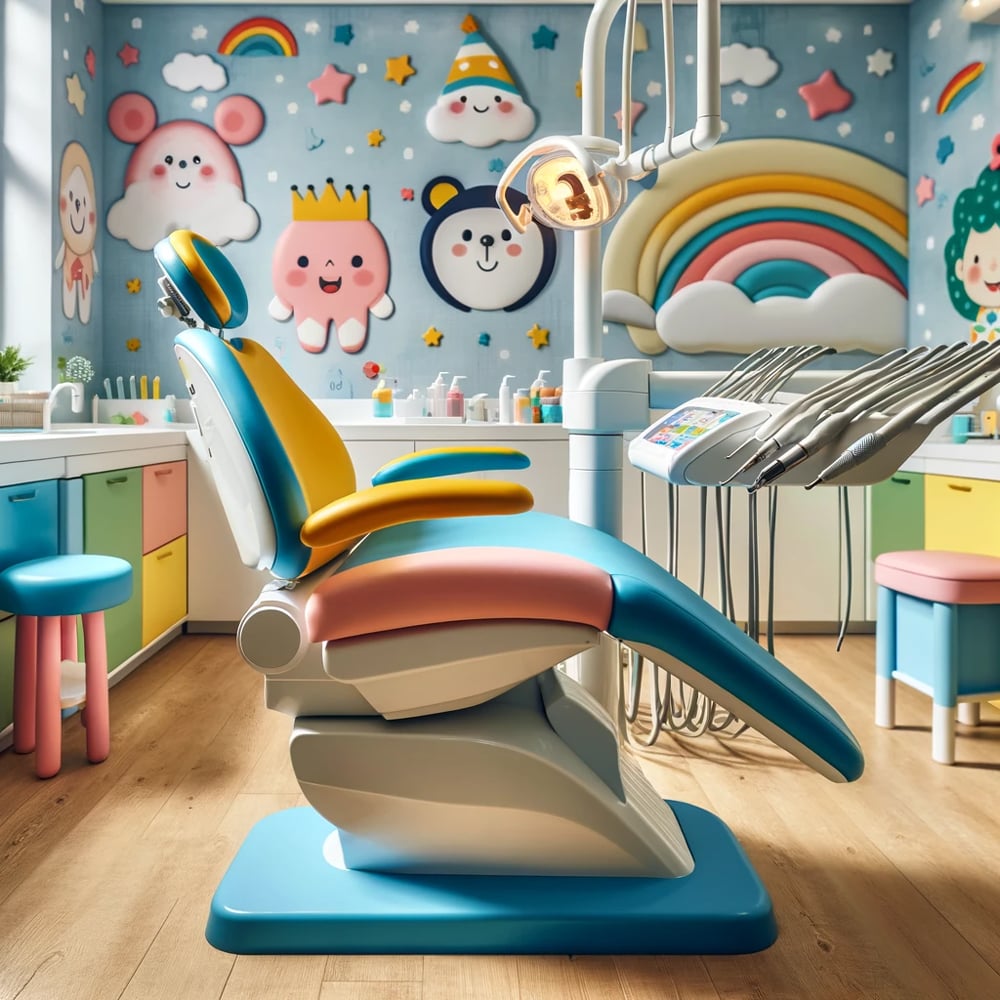
Colors, themes and ceiling distractions are not decoration; they measurably lower anxiety, and calm children mean shorter appointments.
Practices report the biggest wins from a chair-side screen or ceiling-mounted display and a consistent, non-clinical color scheme.
Choosing the Right Pediatric Chair
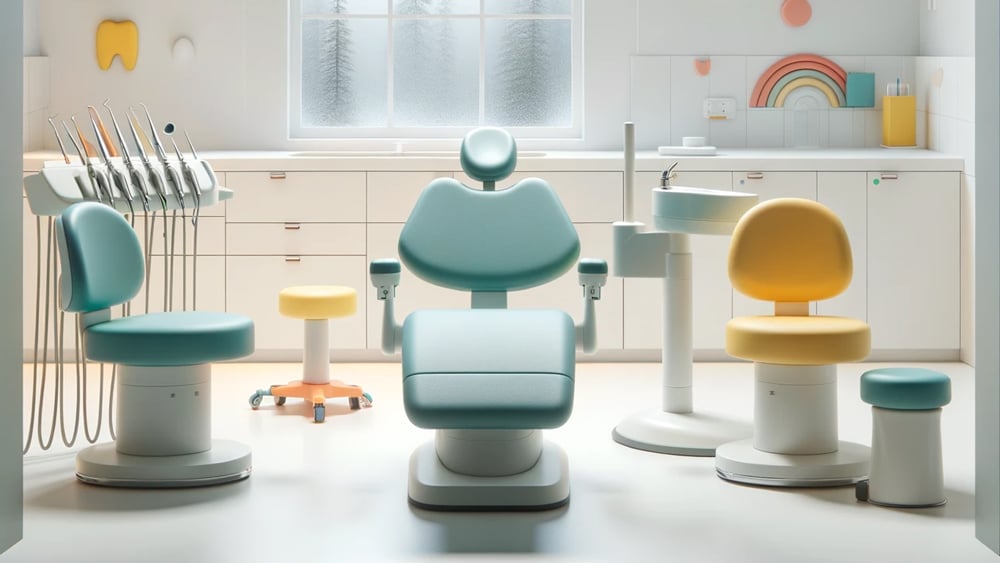
- Match capacity to your mix: verify the chair’s weight rating covers your older children and teens too.
- Check safety features – movement lockout matters more with wriggling patients.
- Budget from our cost guide; pediatric models price similarly to standard chairs of the same tier.
- Plan the operator side as well: pediatric work means frequent position changes, where a saddle stool shines – see saddle stools.
What is a pediatric dental chair?
A dental chair sized and contoured for children, usually with child-friendly design elements and positioning that supports behavior management. Some are dedicated small chairs; others are standard chairs adapted with boosters.
Do dental practices need a special chair for children?
Not always. Pediatric-focused practices benefit from dedicated chairs, but general practices commonly adapt standard chairs with a stable booster cushion and child-friendly setup.
At what age do children use a normal dental chair?
Most children fit a standard chair by around age 8 to 10; younger children need a booster or pediatric chair for correct head positioning.