
TL;DR
- A saddle chair opens the hip angle, which can ease hip discomfort that comes from sitting bent at 90 degrees for hours.
- No study shows that a saddle chair treats hip pain, and a seat that is too wide can make it worse.
- Seat width and seat shape matter more for hips than any other feature.
- A split seat is the first thing to try if a solid saddle presses on your hips or groin.
- See a physical therapist about sharp, one-sided or worsening pain before you change chairs.
A saddle chair may help hip pain that is linked to long sitting with the hips bent, because it lets the thighs slope down and opens the angle at the hip.
It is not a treatment, and for some people a wide saddle makes hip pain worse.
This guide explains when a saddle chair is worth trying, which seat features matter for hips and when to get medical advice first.
This page is general information, not medical advice. See a doctor or physical therapist about pain that is sharp, persistent or getting worse.
Last updated November 17, 2026, using Amazon listing specifications, published research and public Reddit discussions.
Disclosure: this page contains affiliate links. If you buy through them we may earn a small commission at no extra cost to you. This never affects which products we list.
Why Clinicians Get Hip Pain
Hip pain in dental and salon work usually comes from three habits: bending forward from the hips, sitting with the thighs pushed wide and twisting to reach.
- Hinging forward: leaning toward a patient from the hips closes the hip angle and holds the hip flexors short for hours.
- Wide seats: a seat that is too wide pushes the thighs apart and loads the muscles on the outside of the hip.
- Twisted reach: turning to one side for instruments loads one hip more than the other, usually the same one every day.
A hygienist in an r/DentalHygiene thread about the physical toll of hygiene wrote that their left hip hurts from hinging, and another with seven years in practice said a hip aches through the day.
A dentist in an r/Dentistry thread about saddle chairs blamed piriformis pain on sitting in wide chairs and stools.
These are personal accounts, but they share a pattern: the same position, on the same side, for years.
Does a Saddle Chair Help Hip Pain?
It can help when the pain is tied to sitting with your hips bent, and it is unlikely to help when the pain has another cause.
On a flat stool your hips bend to about 90 degrees, and leaning toward a patient closes that angle further.
A saddle seat opens it to roughly 110 to 135 degrees, so you can lean in with less bend at the hip.
A systematic review of saddle and conventional seats in dentistry found lower ergonomic risk scores on saddle seats than on conventional seats.
That review measured posture risk, not hip pain, and we have not found a study that tests saddle chairs as a treatment for hip pain.
There are real limits as well.
A saddle spreads your thighs, and if the seat is too wide for your pelvis it can strain the inner thigh and the outside of the hip.
One office worker in an r/GenXWomen thread about saddle stools said their posture had never been better on a saddle stool, but their hip flexors took a beating until they got used to it.
Ease in over one to two weeks, and stop if the pain is sharp or one-sided.
Seat Width and Split Seats: What Matters for Hips
For hips, the seat should be wide enough to carry your sit bones and narrow enough that your thighs drop without being pushed apart.
A seat that is too wide forces your legs out and strains the inner thigh within an hour.
A seat that is too narrow leaves the sit bones hanging over the edge, which puts pressure where it should not be.
A split seat divides the saddle into two halves, so each half carries one sit bone and the gap takes pressure off the middle.
Users with hypermobile hips on r/Ergonomics have reported that a split seat let their hips relax.
Most budget listings do not publish seat width, which makes buying by numbers hard.
Measure the seat when it arrives, sit on it for a few days and use the return window if your thighs feel forced apart.
Our height and sizing guide explains how to match seat width to your pelvis.
Saddle Chairs to Consider for Hip Comfort
Master Massage Berkeley Split Saddle Stool: Best Split Seat
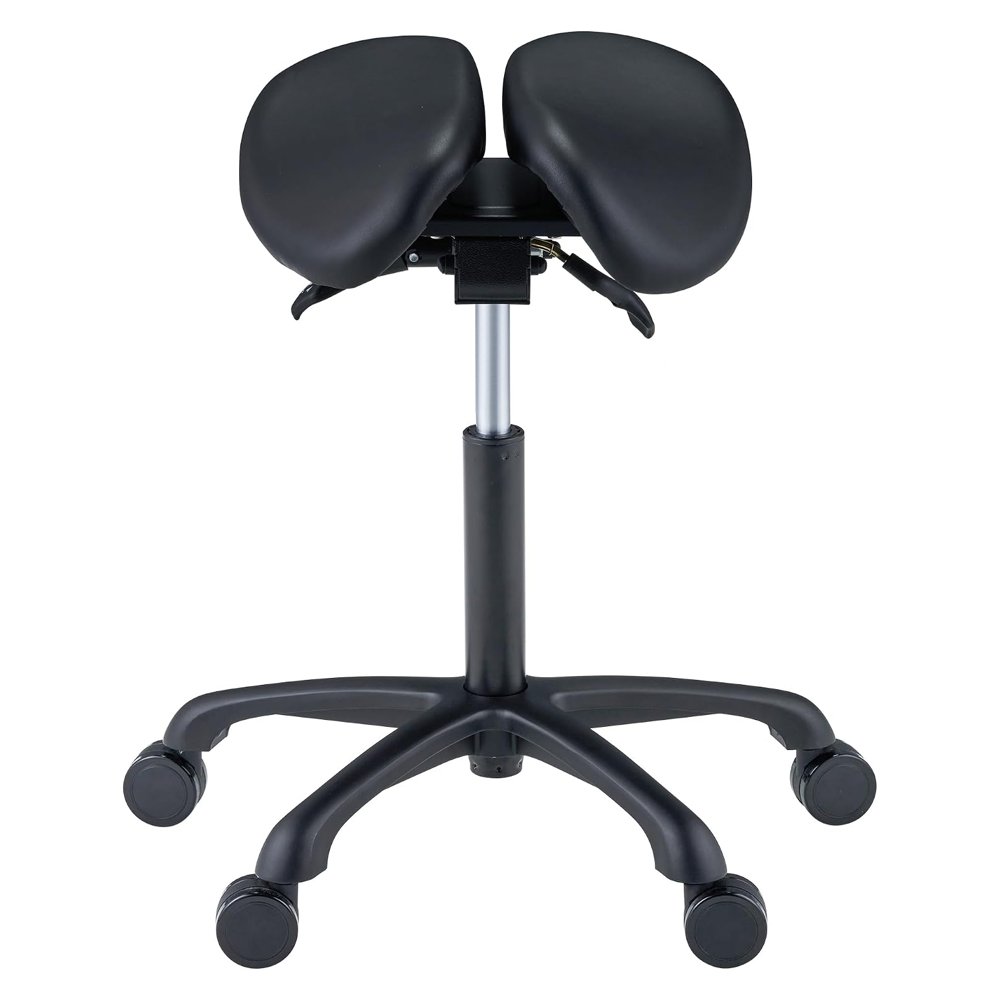
Choose this one if a solid saddle presses on your hips or groin.
The two seat halves support one sit bone each.
The seat adjusts from 21 to 28 inches and has no backrest.
The listing shows 660 lb in its description and 330 lb in its specification table, and we publish 330 lb.
Master Massage Berkeley Split Saddle Stool with Backrest: Best Split Seat with a Backrest
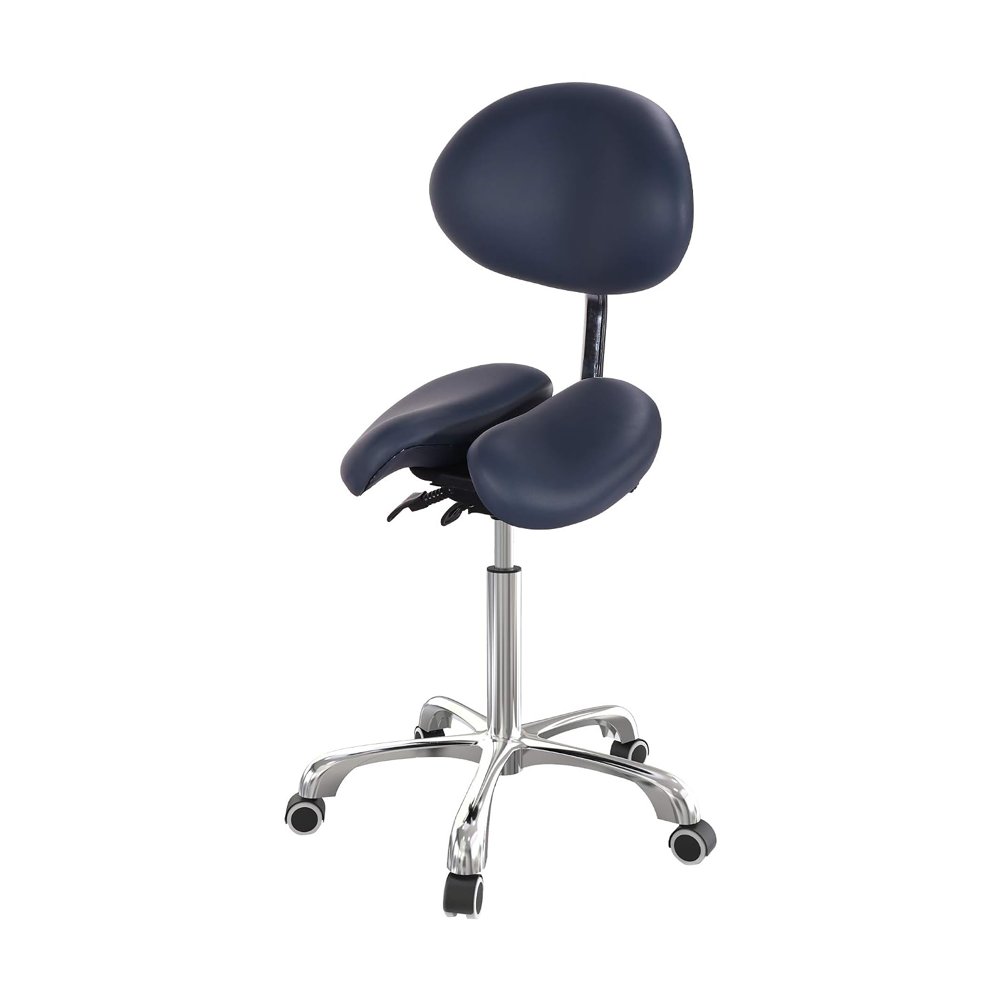
Choose this one if you want a split seat and somewhere to lean between tasks.
The listing describes two tilting options, a 2 inch seat cushion and an aluminum base.
The seat adjusts from 21 to 28 inches.
It is rated to 250 lb, the lowest rating here, and it had only two customer ratings when we checked.
FRNIAMC Backless Saddle Stool: Best Compact Solid Seat
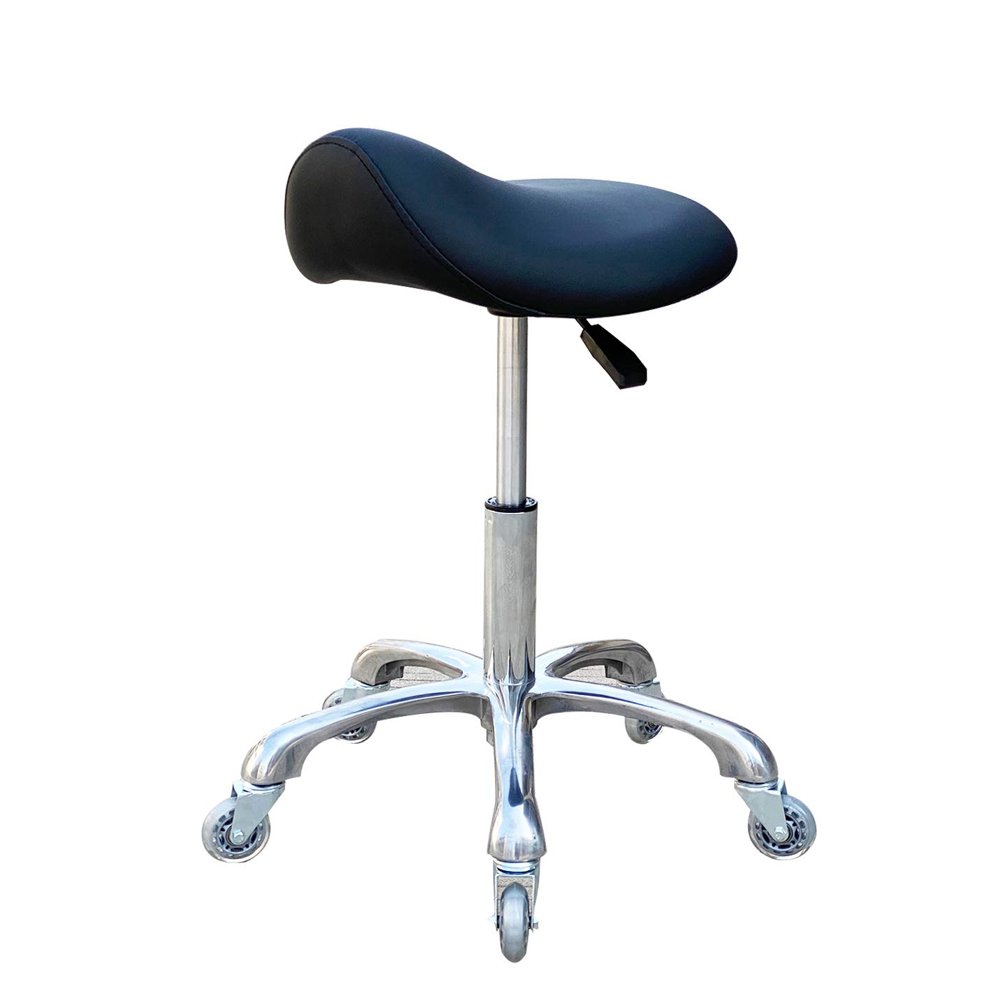
Choose this one if you prefer a solid saddle and want to know the seat size before you buy.
It is one of the few budget listings that states a size, giving 15.74 by 15.74 inches.
The seat adjusts from 20 to 29.5 inches, so most people can set their hips well above their knees.
The listing gives 400 lb and 450 lb in different places, and we publish 400 lb.
Our split saddle guide compares the three Master Massage models side by side.
Setup That Reduces Hip Strain
Set the stool up in this order, because height affects everything that follows.
- Raise the seat until your hips are clearly above your knees and both feet rest flat.
- Let your knees fall to a comfortable width instead of pushing them out.
- Sit back on the wide part of the saddle so your sit bones carry your weight.
- Roll and turn the whole stool toward your work instead of twisting from the hips.
- Bring the patient or the work closer and higher so you bend forward less.
- Stand up and walk for a minute between patients, or every half hour at a desk.
Our guide on how to sit on a saddle stool has a two-week schedule for easing in.
When to See a Physical Therapist
See a physical therapist or doctor before changing chairs if your hip pain is sharp, wakes you at night, runs down the leg or has lasted more than a few weeks.
The same applies to pain in the groin, numbness or a hip that catches or locks.
If you have had a hip replacement, ask your surgeon which sitting positions are safe before you try a saddle seat.
Replies to a dentist with hip and back pain on r/Dentistry made a similar point: equipment helps, but strength work and physical therapy address the cause.
A chair is one part of the answer, alongside movement, strength and how you position your work.
For the wider picture, see our dental ergonomics guide and our article on saddle stools for back pain.
FAQs
Is a saddle chair good for hip pain?
It can help hip discomfort linked to sitting with the hips bent, because the saddle opens the hip angle. It is not a treatment, and a seat that is too wide can make hip pain worse, so fit matters.
Can a saddle stool cause hip pain?
Yes. A saddle that is too wide pushes the thighs apart and can strain the inner thigh and outer hip, and the first one to two weeks often bring some soreness. Pain that is sharp or lasts beyond two weeks is a reason to stop and check the fit.
Is a split saddle better for hip pain?
Often, for people who feel pressure on a solid saddle. Each half supports one sit bone and the gap removes pressure from the middle. It does not change the hip angle, which depends on seat height.
Can I use a saddle chair after a hip replacement?
Ask your surgeon or physical therapist first. Safe sitting positions after a hip replacement depend on the type of surgery and how long ago it was, and only your care team can advise on that.