
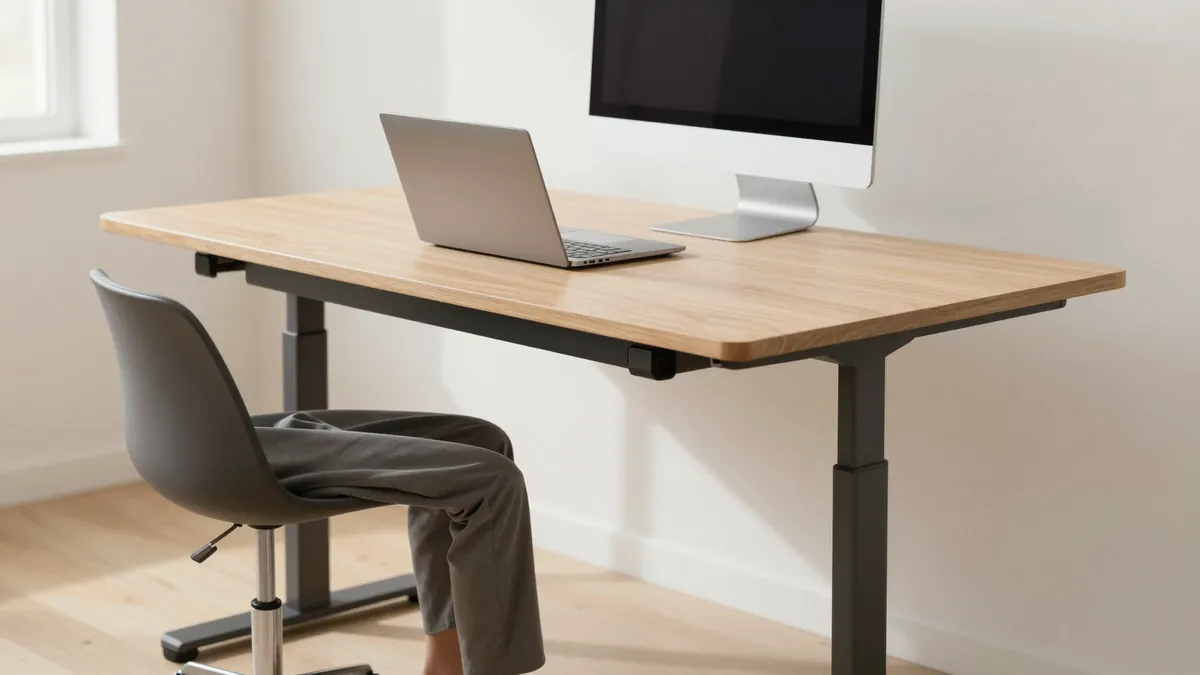
TL;DR
- Yes – saddle stools genuinely help slump-related lower back pain.
- The seat tilts your pelvis forward so the lumbar curve returns automatically.
- Your desk must rise 4 to 8 inches to match.
- Give it one to two weeks of gradual adaptation.
Yes, saddle stools genuinely help many people with sitting-related lower back pain, and the mechanism is well understood: the saddle tilts your pelvis forward so your lumbar spine keeps its natural curve without effort.
Research comparing saddle and conventional seats found significantly lower ergonomic risk with saddle designs.
They are not magic: they help most with pain caused by slumped sitting, and they demand a setup change most people are not warned about.
Disclosure: this page contains affiliate links. If you buy through them we may earn a small commission at no extra cost to you. This never affects which products we list.
| Product | Best for | Price |
|---|---|---|
| Antlu saddle stool with backrest | Best overall for desk work | Check price |
| Master Massage Berkeley split with backrest | Best if solid seats cause pressure | Check price |
| Cadiario tilting saddle | Best budget pick | Check price |
| FRNIAMC heavy-duty hydraulic | Best heavy-duty (higher weight rating) | Check price |
| MWOSEN saddle with foot ring | Best for standing-desk height | Check price |
How we picked: seat geometry, adjustability, weight rating, cushion quality over long sessions and real practitioner feedback.
Commissions never change rankings; full methodology on our How We Review page.
Why Saddle Seating Helps a Slumping Back
On a normal chair your pelvis rolls backward and your lumbar spine flattens into a C-shape; muscles and discs carry the strain, and by mid-afternoon your back reports it.
On a saddle, your legs drop at roughly 45 degrees, the pelvis tips forward and the lumbar curve returns on its own — the same reason we recommend them to dental professionals (see also our full saddle stool vs office chair comparison), who sit leaning forward all day.
A systematic review found saddle seats associated with significantly lower ergonomic risk than conventional seats (PMC).
The Setup Change Nobody Mentions
- Your desk is now too low. Saddle height puts you 4 to 8 inches above normal chair height; you need a height-adjustable desk, a standing desk at mid-height, or a desk riser.
- Transition gradually: start with one to two hours a day. New muscles are working; mild adaptation soreness for the first week is normal, sharp pain is not.
- Level tilt first: if your model tilts, start level and add slight forward tilt only if you still feel your lower back rounding.
Can you sit on a saddle stool all day?
After an adaptation period of one to two weeks, many people do. Start with one to two hours a day and build up; even adapted, mixing saddle sitting with standing and walking beats any single posture held all day.
Do saddle stools help sciatica?
Many users with sitting-aggravated symptoms report relief because the open hip angle reduces pressure at the back of the thigh and restores the lumbar curve. Sciatica has multiple causes though, so persistent symptoms belong with a clinician, not a chair review.
Are saddle stools uncomfortable at first?
Commonly, yes: the seat shape is unfamiliar and postural muscles are waking up. Mild soreness in week one is normal and fades; sharp or radiating pain means stop and check your setup or the stool’s fit.
What desk height do I need for a saddle stool?
Roughly 4 to 8 inches higher than for a normal chair, so your forearms rest level while your hips stay above your knees. A sit-stand desk at mid-height is the easiest pairing.
More guides: saddle stools with back support, split saddle seats and our full ergonomic seating guide.