
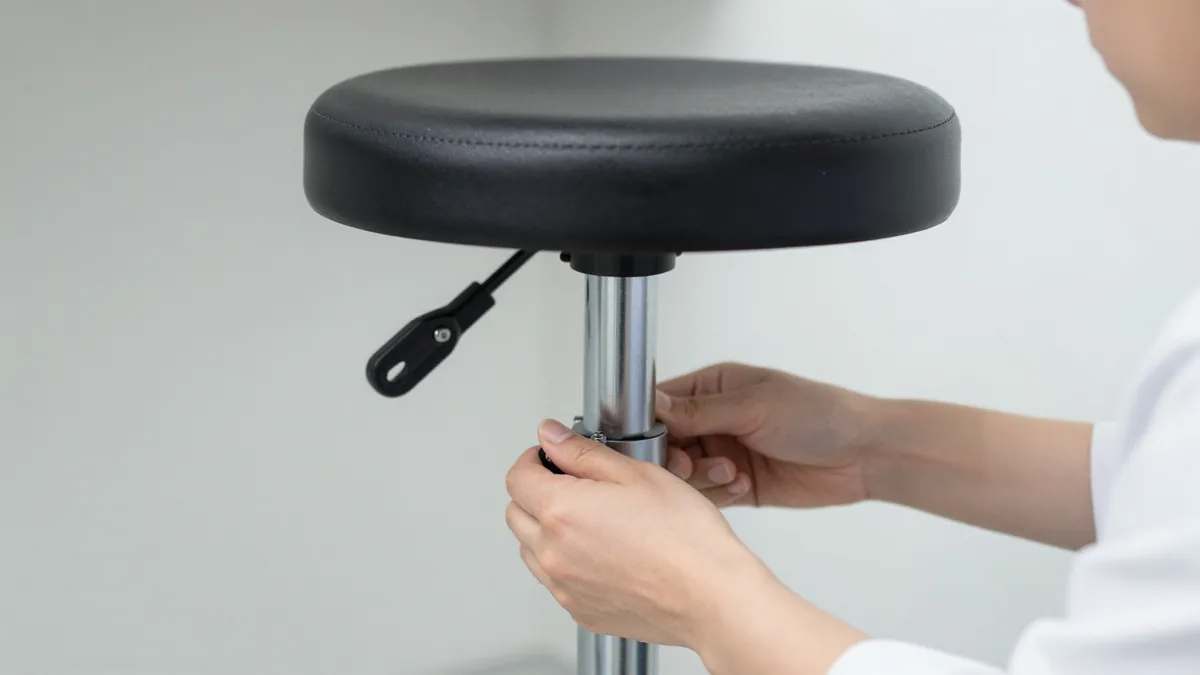
TL;DR
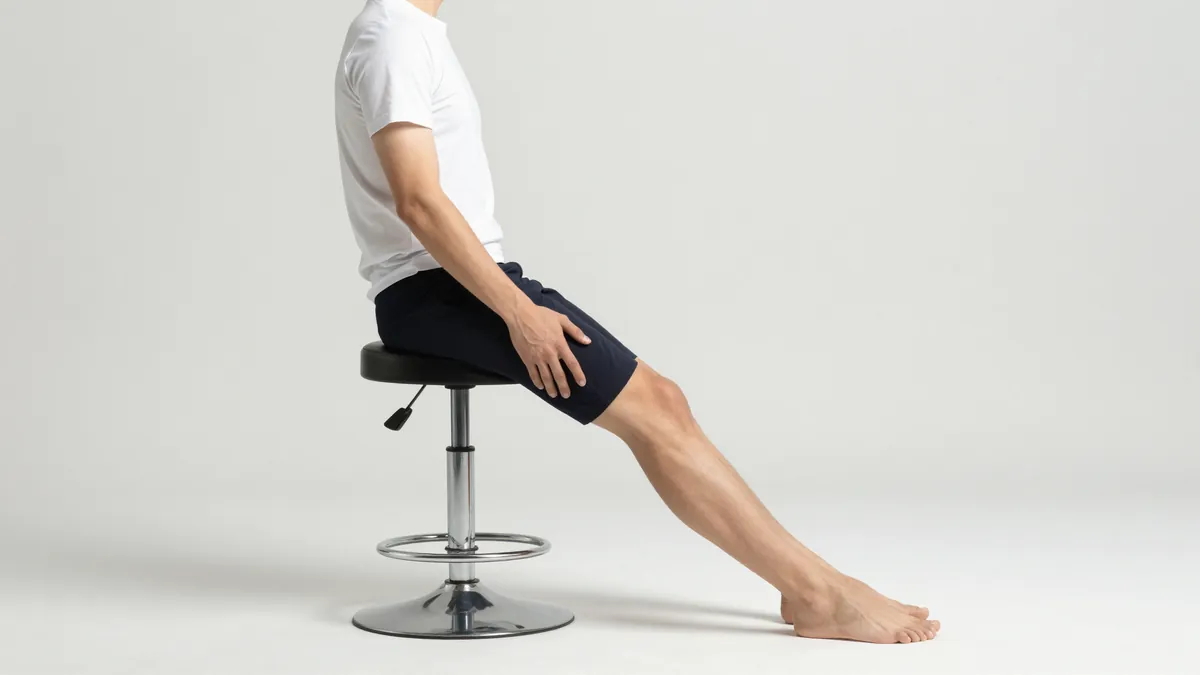
- Height: thighs sloping down at about 45 degrees, feet flat, hips above knees.
- Start with the seat level; add forward tilt only if your lower back rounds.
- Raise your desk or the patient chair – you now sit 4 to 8 inches higher.
- Give it one to two weeks; start with 1-2 hours a day.
To sit on a saddle stool correctly: set the height so your thighs slope down at roughly 45 degrees with feet flat, keep the seat level (add slight forward tilt only if needed), and straddle it like a rider – hips open, weight on your sit bones, spine tall.
Wrong setup is the number one reason people think saddle stools hurt.
Here is the full method.
Step-by-Step Setup
- Height first: raise the seat until your hips are clearly above your knees and your thighs slope down at about 45 degrees. You will sit noticeably higher than on a normal chair – that is the point.
- Feet flat, ground contact: both feet rest flat, sharing your weight. If your feet dangle, lower slightly or use a stool with a foot ring.
- Seat tilt level to start: if your model tilts, begin level. Add a few degrees of forward tilt only if you feel your lower back rounding during work.
- Straddle, don’t perch: sit into the saddle with weight on the sit bones, not the soft tissue. On a split saddle, each half should support one sit bone.
- Check the mirror test: from the side, your ear, shoulder and hip should stack vertically with a visible curve in your lower back – no effort required.
Match Your Working Surface
Sitting 4 to 8 inches higher means everything you work at must rise too.
In the operatory, raise the patient chair (our chair adjustment guide covers the sequence).
At a desk, you need a sit-stand desk at mid-height or a riser.
Using a saddle at a standard-height desk forces you to hunch, and the stool gets blamed for the desk’s crime.
The Two-Week Adaptation Plan
| Days | Usage | What to expect |
|---|---|---|
| 1-3 | 1-2 hours, easy tasks | Feels unfamiliar; mild inner-thigh and core awareness |
| 4-7 | Half your working day | Adaptation soreness fades; posture starts feeling natural |
| 8-14 | Full day with breaks | Most users fully adapted; standing desk pairing feels easy |
Mild muscle soreness in week one is normal – unused stabilizers waking up.
Sharp, radiating or one-sided pain is not adaptation.
Stop and re-check height, tilt and seat size against your body.
Mistakes That Make Saddle Stools Hurt
- Too low. The most common error – at normal chair height a saddle presses wrong and tilts you back. When in doubt, go higher.
- Full forward tilt on day one. Aggressive tilt slides you forward and loads your arms; start level.
- Wrong seat size: pelvis width varies – petite riders on wide seats and vice versa both suffer. Check seat dimensions before buying – our height and sizing guide has the numbers by body type.
- Old squishy cushion: a collapsed saddle cannot support sit bones; practitioners describe these as the ones that “hurt your back”.
FAQs
How high should a saddle stool be?
High enough that your hips sit clearly above your knees with thighs sloping down at roughly 45 degrees and both feet flat on the floor. This is noticeably higher than conventional chair height – typically 4 to 8 inches more.
Should a saddle stool tilt forward?
Start with the seat level. Add a few degrees of forward tilt only if your lower back still rounds during work. Aggressive tilt from day one slides you forward and causes arm and wrist loading.
Why does my saddle stool hurt?
Usually setup, not the stool: seat too low, too much tilt, wrong seat width for your pelvis, or a worn-flat cushion. Adaptation soreness in the first week is normal; sharp or persistent pain means re-check the setup and fit.
How long does it take to get used to a saddle stool?
One to two weeks for most people, starting with one to two hours a day and building up. Most who give up either skipped the gradual transition or never set the height correctly.