
TL;DR
- A saddle stool keeps your back neutral during lean-in tattoo work.
- The FRNIAMC with back support is the best tattoo artist chair overall; Cadiario is the budget favorite.
- Hydraulic height range matters more than any other spec.
- Choose wipeable seamless PU for hygiene.
The best tattoo artist chair for most artists is the FRNIAMC saddle stool with back support: it adjusts from 20 to 29.5 inches for reaching clients on beds and chairs, and it has a backrest for the long line-work sessions.
The Cadiario is the budget pick artists in other seated trades consistently rate above stools costing several times more.
Tattooing punishes the lower back in a specific way: hours of leaning toward the client with your arms working in front of you.
A saddle seat keeps your pelvis rotated forward while you lean, so the curve stays in your lumbar spine instead of your shoulders rounding into a hunch.
Disclosure: this page contains affiliate links. If you buy through them we may earn a small commission at no extra cost to you. This never affects which products we list.
| Product | Best for | Price |
|---|---|---|
| FRNIAMC saddle stool with back support | Best overall for studios | Check price |
| Cadiario hydraulic saddle with footrest | Best budget pick | Check price |
| Antlu saddle stool with backrest | Best backrest support | Check price |
| HNKastela saddle stool with backrest | Best for lower seats (from 19 in) | Check price |
| FRNIAMC 450 lb rolling saddle | Best heavy-duty (450 lb) | Check price |
How we picked: seat geometry, adjustability, weight rating, cushion quality over long sessions and real practitioner feedback.
Commissions never change rankings; full methodology on our How We Review page.
Tattoo Artist Chair vs Client Chair
A tattoo artist chair is the stool the artist sits on, while a client chair is the adjustable bed or recliner the customer uses.
Search results mix the two, so check which one a listing means.
This guide covers the artist’s seat.
Most artists use a rolling stool with a gas cylinder, and a saddle seat is the version built for leaning toward a client for hours.
What Matters for Tattoo Work
- Height range beats everything. You work on clients lying on beds, sitting in chairs and everything between; a tall hydraulic cylinder covers all of it without perching or slouching.
- Anterior pelvic tilt is a feature, not a bug. The saddle tips your pelvis forward on purpose; set the seat level or with slight forward tilt and let your hips, not your lower back, do the leaning.
- Wipeable, seamless upholstery. Same hygiene logic as your work surfaces: PU leather with minimal seams disinfects fast between clients.
- Casters that match your floor. Hard casters skate on concrete studio floors; soft casters roll better if your station sits on mats.
The Best Tattoo Artist Chairs and Who They Suit
The comparison table above has affiliate links for all five stools.
FRNIAMC Saddle Stool with Back Support: Best Overall
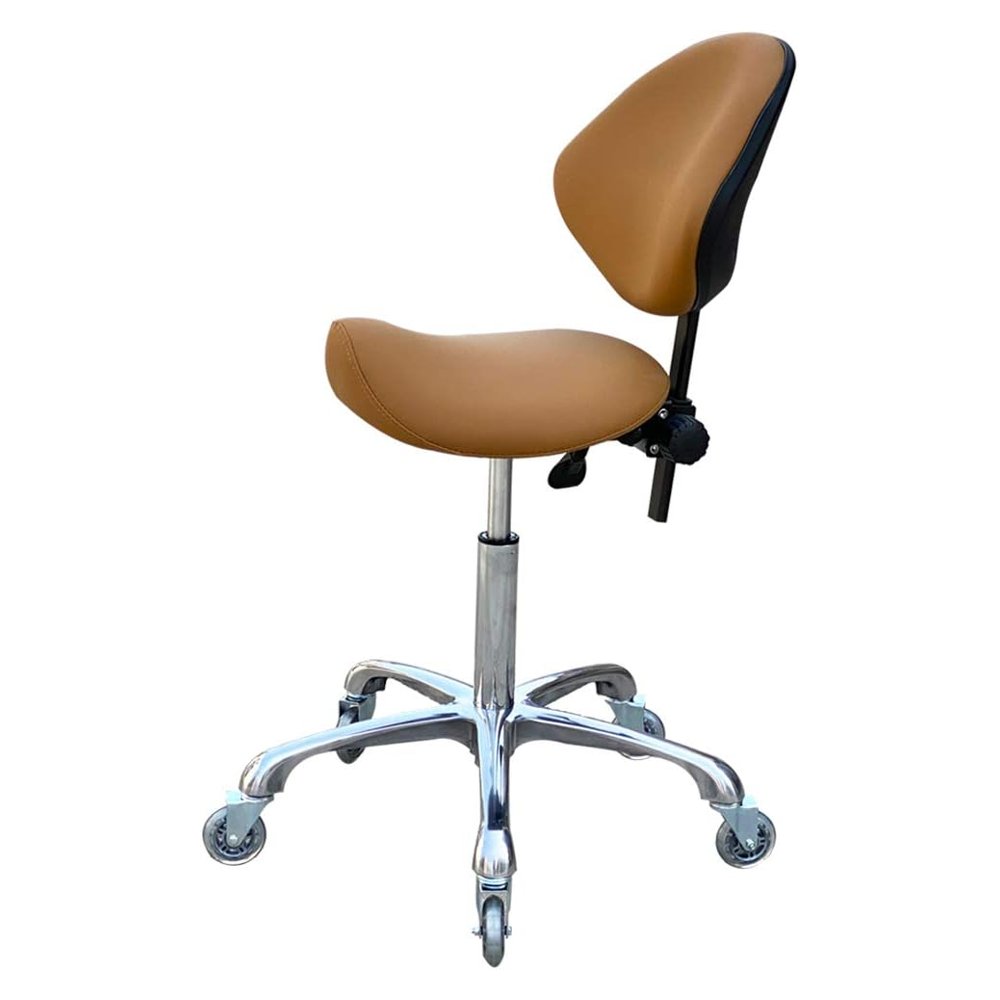
Choose this one if you spend long line-work or shading sessions in a single position.
The backrest gives you somewhere to rest between passes without getting off the stool.
It suits artists who mostly work on clients seated in a tattoo chair or lying on a bed at a steady height.
It adjusts from 20 to 29.5 inches and is rated to 350 lb.
Cadiario Hydraulic Saddle with Footrest: Best Budget Pick
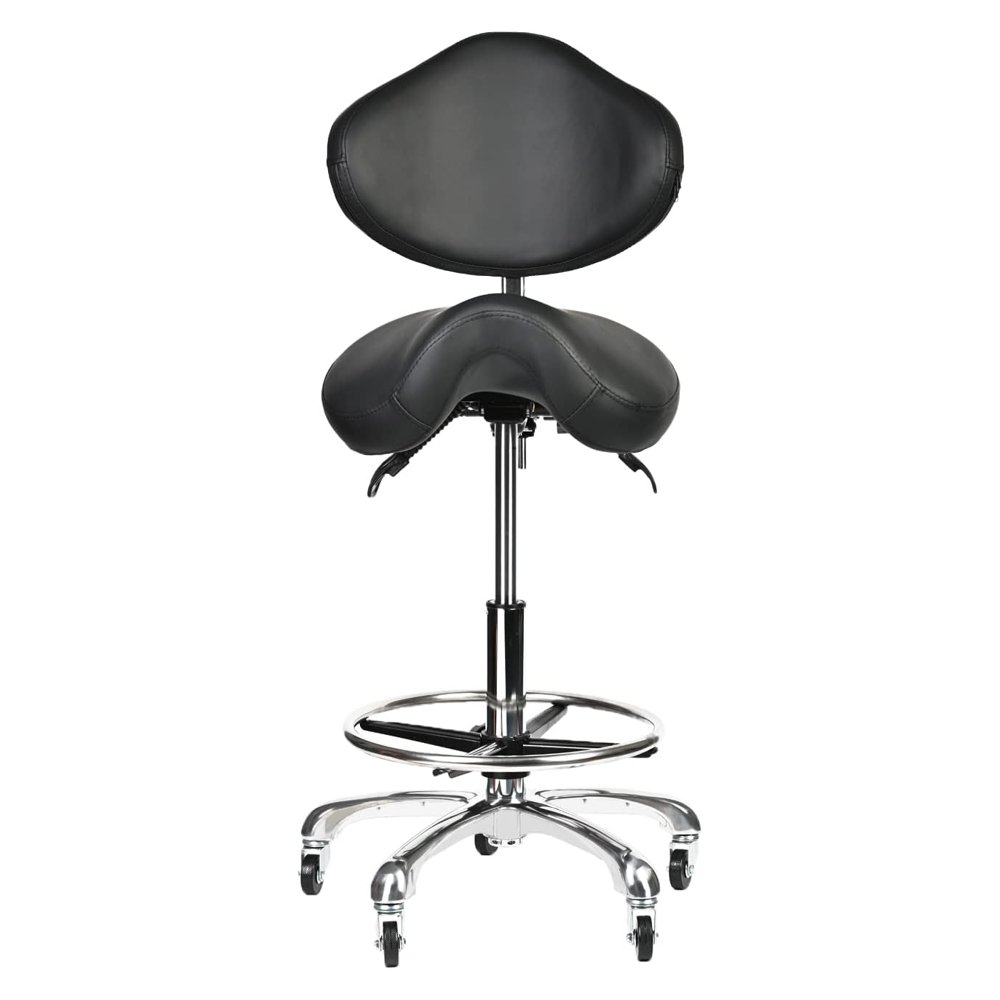
Choose this one if you raise the seat high to work over a client lying on a bed.
The footrest supports your legs once your feet no longer rest flat on the floor.
It adjusts from 22 to 30 inches, has a tilting seat and backrest, and is rated to 400 lb.
Antlu Saddle Stool with Back Support: Best Backrest Support
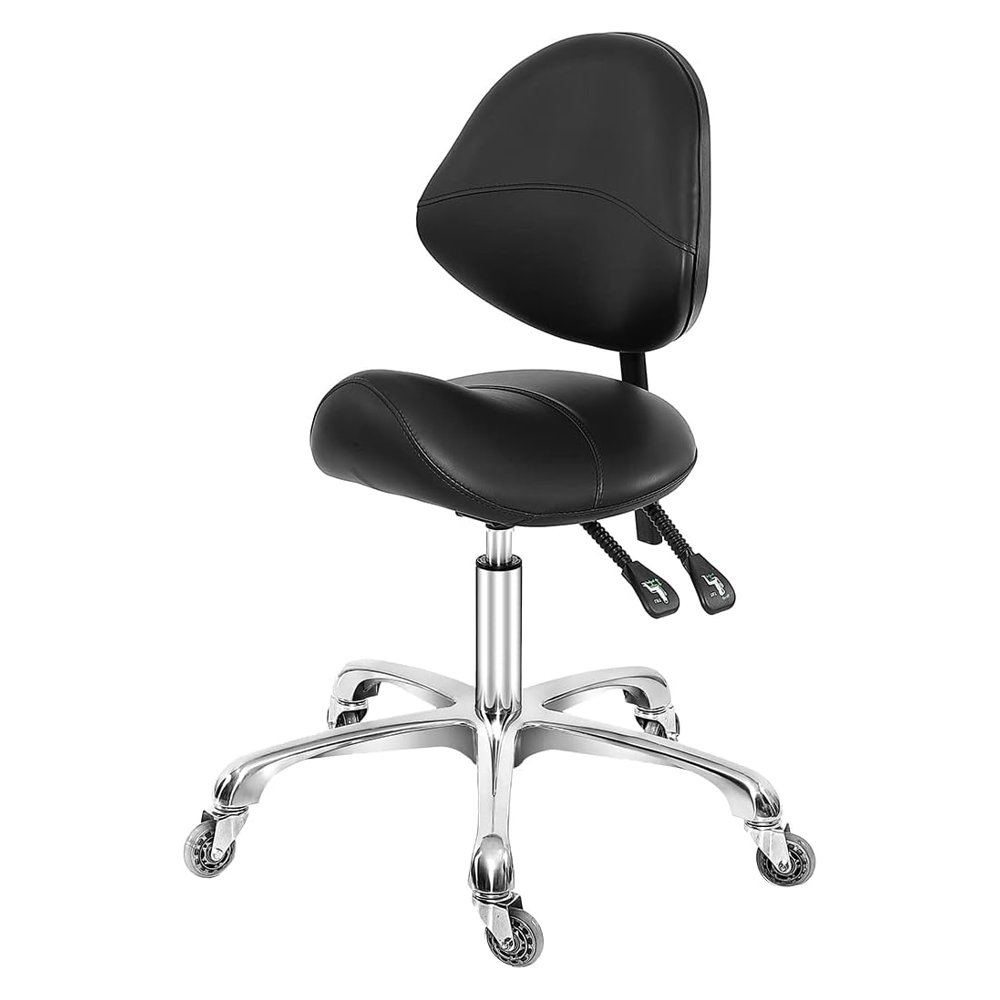
Choose this one if back support matters more to you than anything else.
Antlu is the brand dental clinicians buy most often for all-day chairside work, which is the closest match to tattooing posture.
It adjusts from 20 to 28 inches and is rated to 300 lb, so check that maximum height against your tattoo bed before you buy.
Backrest, Foot Ring, Split Seat or Tilt?
Most tattoo artists need only one or two of these features, so pay for the ones that match how you work.
| Feature | Choose it if | Skip it if |
|---|---|---|
| Backrest | You hold one position for an hour or more at a time | You circle the client constantly |
| Foot ring | You work above a client lying on a raised bed | Your feet stay flat on the floor at working height |
| Split seat | You get pressure or numbness after an hour on a solid saddle | A solid saddle already feels comfortable |
| Seat tilt | You lean far forward for most of a session | You sit mostly upright |
Back Support or Chest Support?
Choose back support if you sit upright between passes, and chest support if you lean forward for most of a session.
A chest support is a padded bar in front of your body that takes the weight of your torso while you lean in.
Some purpose-built artist chairs have one.
None of the five stools in the table above has a dedicated chest support, so treat them as back-support picks.
A backrest only helps when you actually lean on it, so set it to touch your lower back while you sit upright.
How to Set Your Stool Height for Tattooing
Set the client first and the stool second.
- Position the client so the area you are tattooing sits near your elbow height when you are seated.
- Raise the stool until your hips are clearly above your knees and your thighs slope downward.
- Plant both feet flat on the floor, or on the foot ring if the seat is high.
- Roll close enough that you lean from the hips with a straight back, not from the shoulders.
- Move the client or the stool every time the placement changes, so you never twist to reach.
Our saddle stool height and sizing guide matches seat height to your own height.
For posture details, see how to sit on a saddle stool correctly.
What the Research Says About Tattooing and Pain
Researchers at Ohio State University measured muscle activity in 10 working tattoo artists during real sessions.
All 10 exceeded recommended exertion limits in at least one muscle group, most often the trapezius in the upper back and neck.
The published study in Applied Ergonomics also reports 12-month discomfort in more than half of the artists surveyed in the neck, shoulders, hands and wrists, and upper and lower back.
The sample was small, so treat those figures as a strong warning sign and not as a precise rate.
A stool cannot fix neck and arm posture on its own, but it is the part of your setup that is easiest to change.
For the evidence on saddle seating itself, read our guide to saddle stool benefits.
Budget Stool or Premium Saddle Chair?
Every stool on this page is a budget model sold on Amazon.
Premium saddle chairs from Salli, Bambach and Crown Seating cost several times more and are built to be sized to one person.
A budget stool is the sensible first purchase for most tattoo artists, because it shows whether saddle seating suits you before you spend more.
Our Salli vs Bambach comparison covers what the extra money buys.
Two related guides: Amazon saddle stools vs $1,000 dental brands and how to sit on a saddle stool.
FAQs
Why do tattoo artists use saddle stools?
The saddle position keeps the pelvis rotated forward while you lean toward the client, so the lower back keeps its natural curve during long sessions instead of rounding into a hunch. The high seating position also improves reach across the client.
Are saddle stools good for long tattoo sessions?
Yes, but transition gradually. Saddle seating works postural muscles that regular chairs let sleep, so use it for part of each session at first; most artists adapt within one to two weeks.
What height should my stool be for tattooing?
High enough that your hips are clearly above your knees, with the client area roughly at your relaxed forearm height. A wide hydraulic range matters more than any single number because client positions change constantly.
Is a saddle stool better than a regular tattoo stool?
A saddle stool is better for forward-leaning work because it tilts the pelvis forward and keeps the natural curve in the lower back. A flat round stool is cheaper and easier to hop on and off, but it lets the lower back round when you lean toward the client.
Do tattoo artists need a stool with a backrest?
A backrest helps if you hold one position for long stretches, because you can rest against it between passes. If you move around the client constantly, a backless saddle is lighter and easier to reposition.
How long does it take to get used to a saddle stool?
Most people need one to two weeks. Start with part of each session on the saddle and build up, because the position works postural muscles that an ordinary chair does not.
What chair do tattoo artists sit on?
Most sit on a rolling stool with a gas cylinder, so they can change height as the placement changes. Saddle stools are popular because the seat keeps the lower back straight while the artist leans toward the client.
Is chest support better than a backrest for tattooing?
It depends on how you sit. A chest support carries your upper body when you lean forward for long stretches, while a backrest only helps when you sit upright between passes. Artists who lean in for most of a session usually get more from chest support.
More guides: saddle stools with back support, split saddle seats and our full ergonomic seating guide.
Saddle stool guides for other professions: dental hygienists, estheticians and lash techs, sonographers, veterinarians and salon professionals.